
Uncategorized
Examining the atmospheres and climate of exoplanets
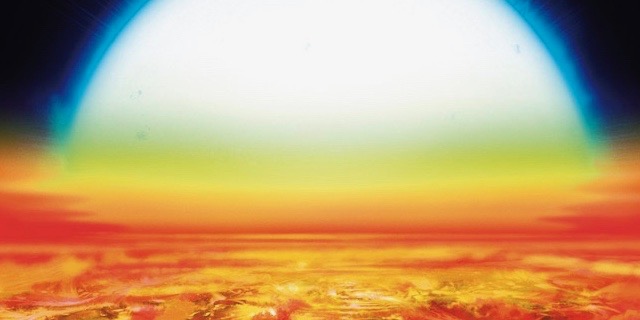
After being able to measure the masses and the diameters of exoplanets, using the information to deduce what materials they have formed from, astronomers now seek to detect the chemical composition of their atmospheres if they possess one. For several years, atmosphere detection announcements have been in the news before being questioned and recently proven. […]
Continue Reading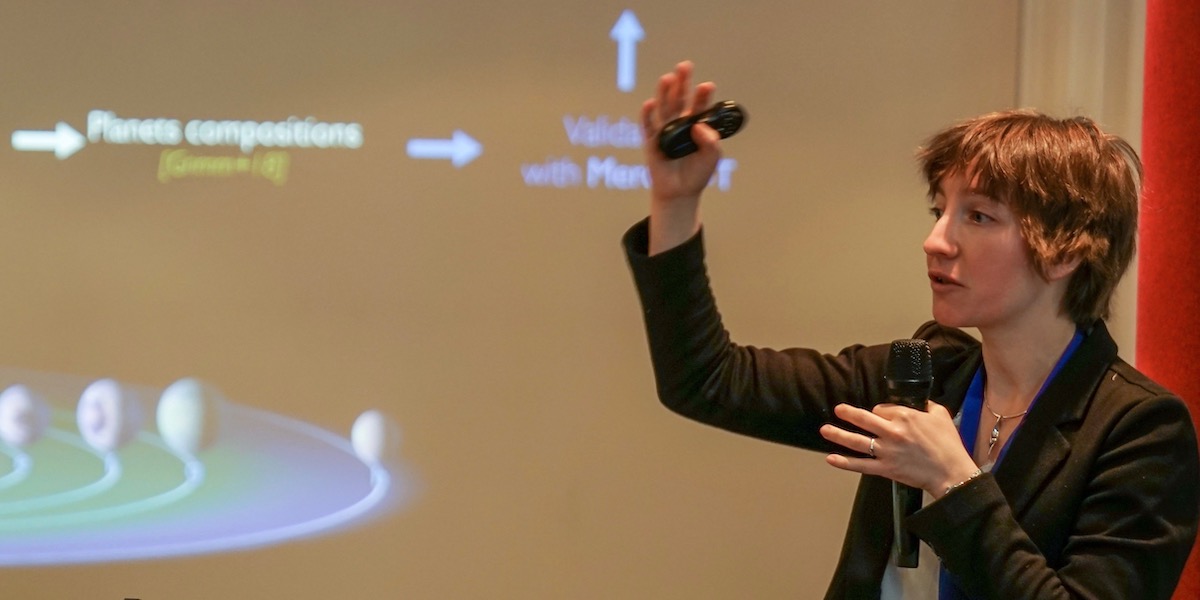
A new teacher at PlanetS
Emeline Bolmont has just been appointed Assistant Professor in the Department of Astronomy at the University of Geneva, a position funded by PlanetS. Originally from Toul near Nancy in north-eastern France, the new professor was introduced to astronomy at a very early age by her parents who occasionally went to observe the sky on a […]
Continue Reading
Neural networks predict planet mass
To find out how planets form, astrophysicists run complicated and time consuming computer calculations. Members of the NCCR PlanetS in Bern have now developed a totally novel approach to speed up this process dramatically. They use deep learning based on artificial neural networks, a method that is well known in image recognition. Planets grow in […]
Continue Reading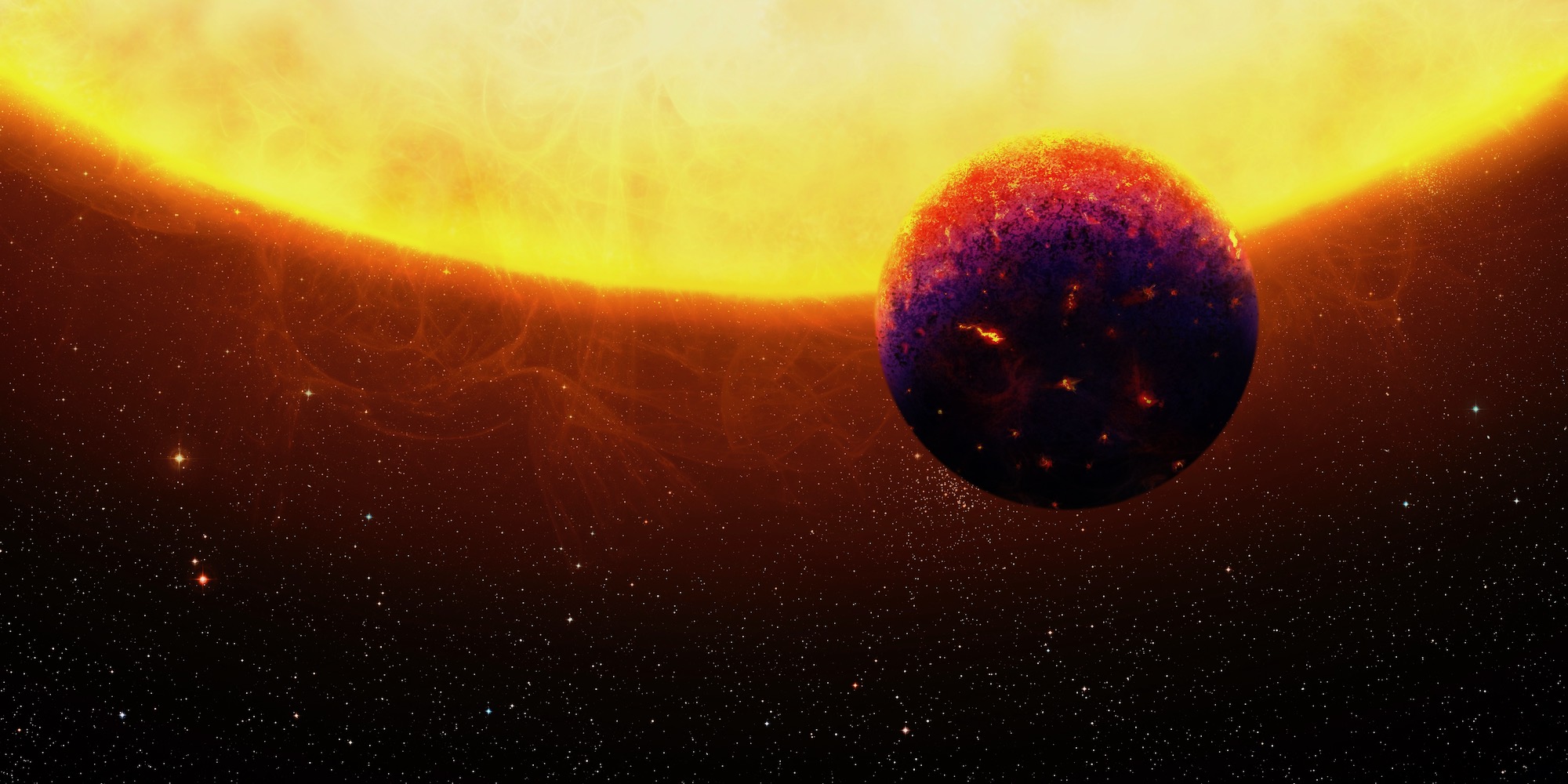
Current highlights of PlanetS research
Astronomers have discovered a large number of rocky planets outside our solar system. Among them there are many exotic objects which we do not know in our solar system: Super-Earths, some of them even rich in gems, or water worlds with a global ice layer on the ocean floor. But what does it take to […]
Continue Reading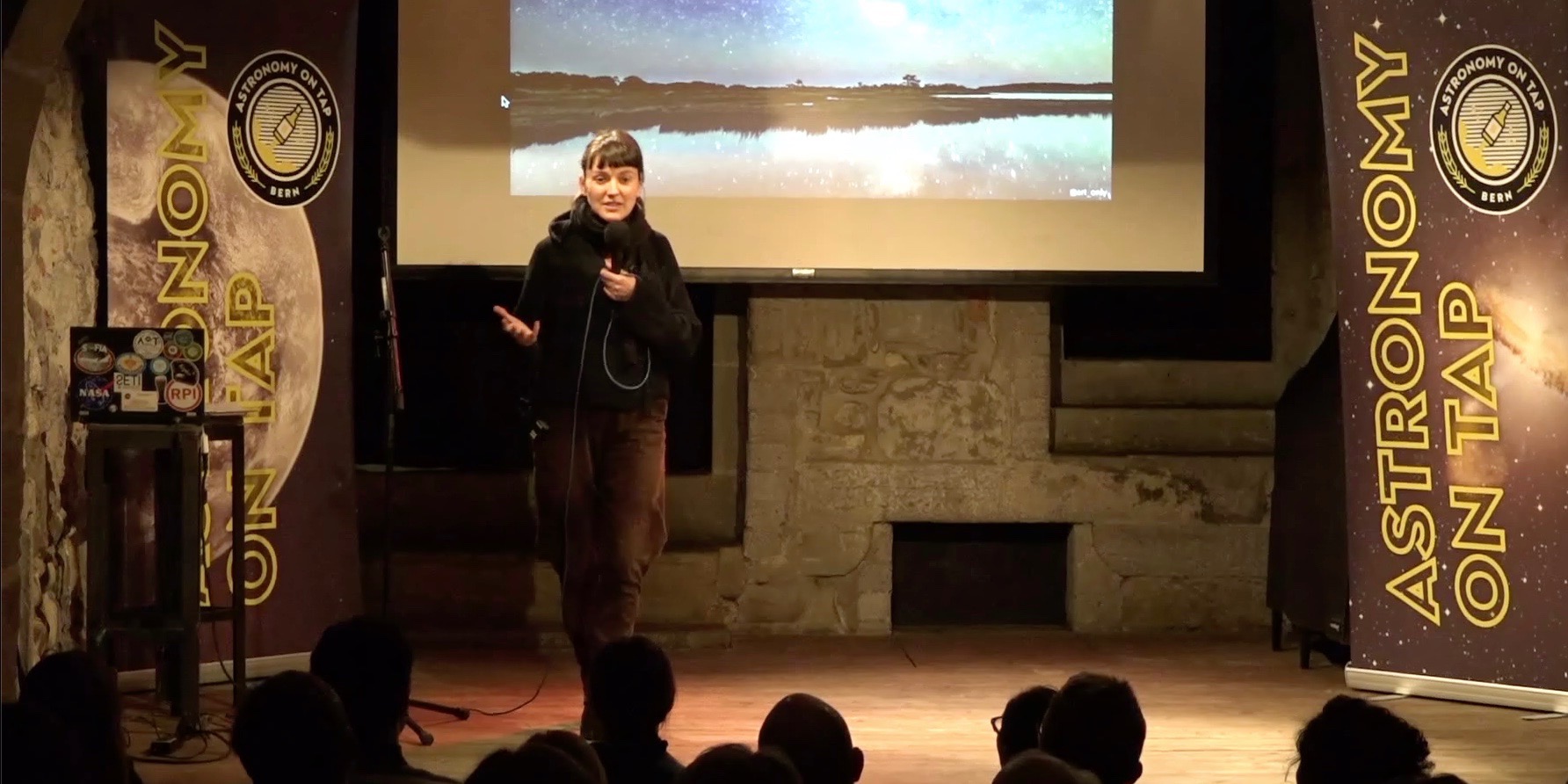
Astronomy Outreach Like A Rocket
For the fifth time already, the public and free science slam “Astronomy on Tap” took place at “ONO Kulturlokal” in Bern. On the occasion of the “United Nations International Day of Women and Girls in Science” and the “IAU100 Women & Girls in Astronomy Day” on 11 February 2019, four female space scientists spoke about […]
Continue Reading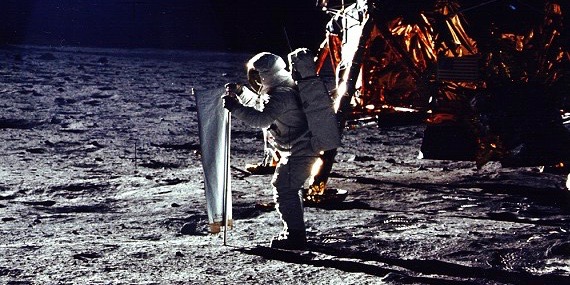
Insights from the moon to the exoplanets
In the anniversary year of the moon landing of Apollo 11 there are exciting things to discover. The University of Berne will be celebrating a science festival together with the public from 27 to 30 June 2019. The Swiss National Library in Berne is showing a transport container for the Apollo solar wind experiment. And […]
Continue Reading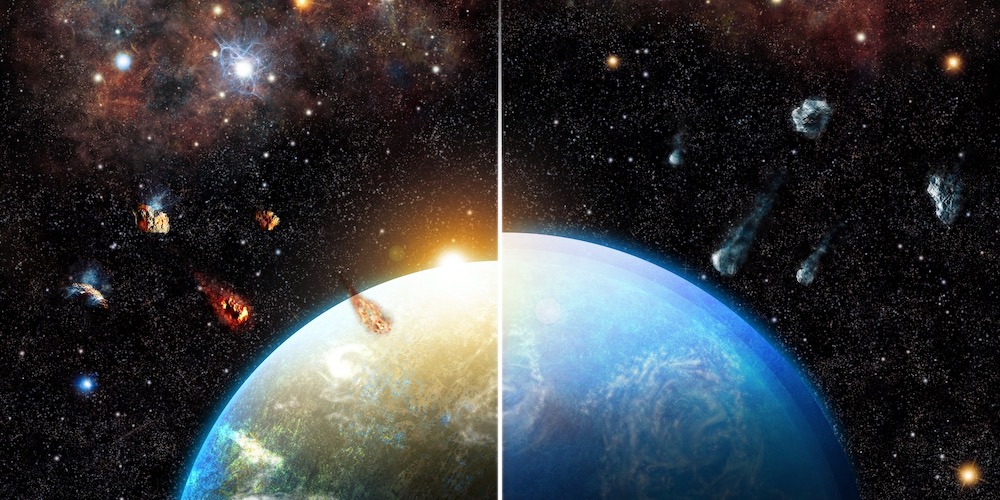
Better to dry a rocky planet before use
Earth’s solid surface and clement climate may be in part due to a massive star in the birth environment of the Sun. Without its radioactive elements injected into the early solar system, our home planet could be a hostile ocean world covered in global ice sheets. This is the result of computer simulations of planet […]
Continue Reading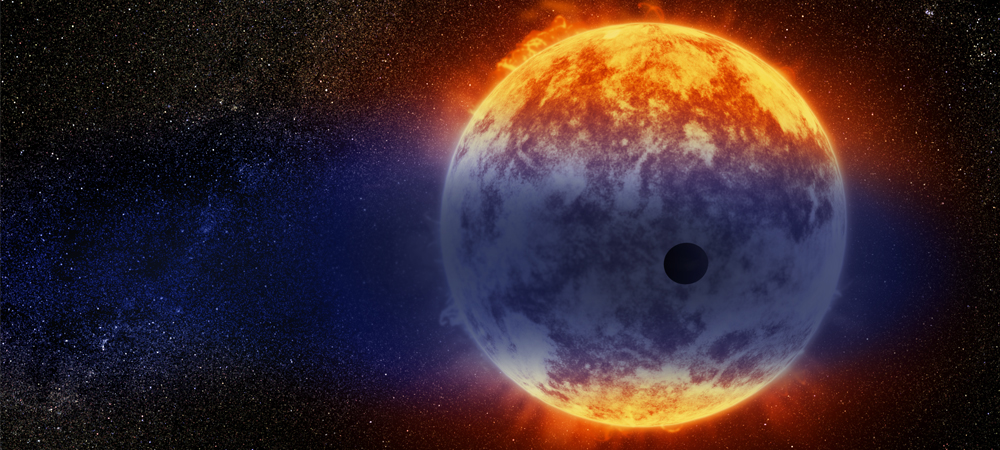
The shrinking planet
“But where did the hot Neptunes go?” This is the question astronomers have been asking for a long time, faced with the mysterious absence of planets the size of Neptunes very close to their star. A team of researchers, led by astronomers from the University of Geneva, has just discovered that one of these planets […]
Continue Reading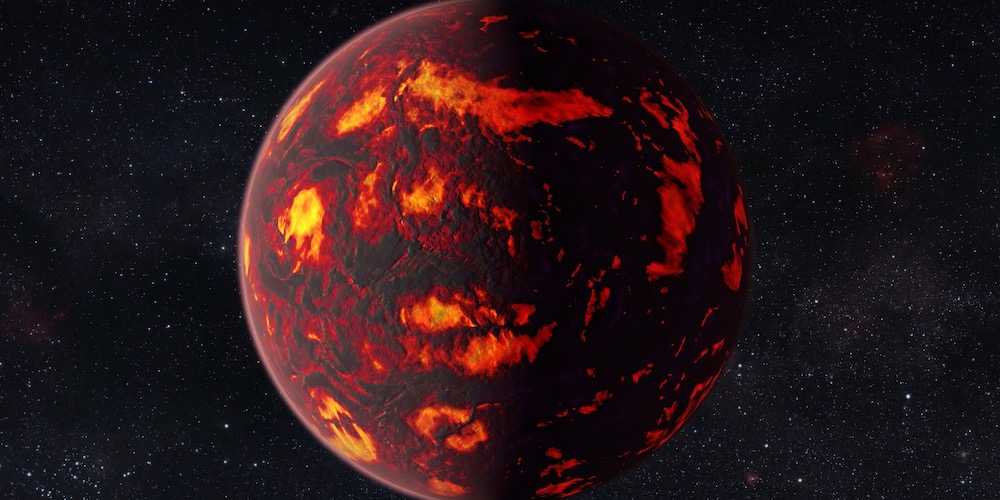
Spotting Protoplanet Collision Afterglows
Planets start out with a bang. During the last stage of planet formation, planetary embryos collide with other protoplanets, causing their surfaces and mantles to extensively melt. Will it be possible to directly image such molten protoplanets with future telescopes? This is the question that was addressed by a team of young PlanetS researchers. Irene […]
Continue Reading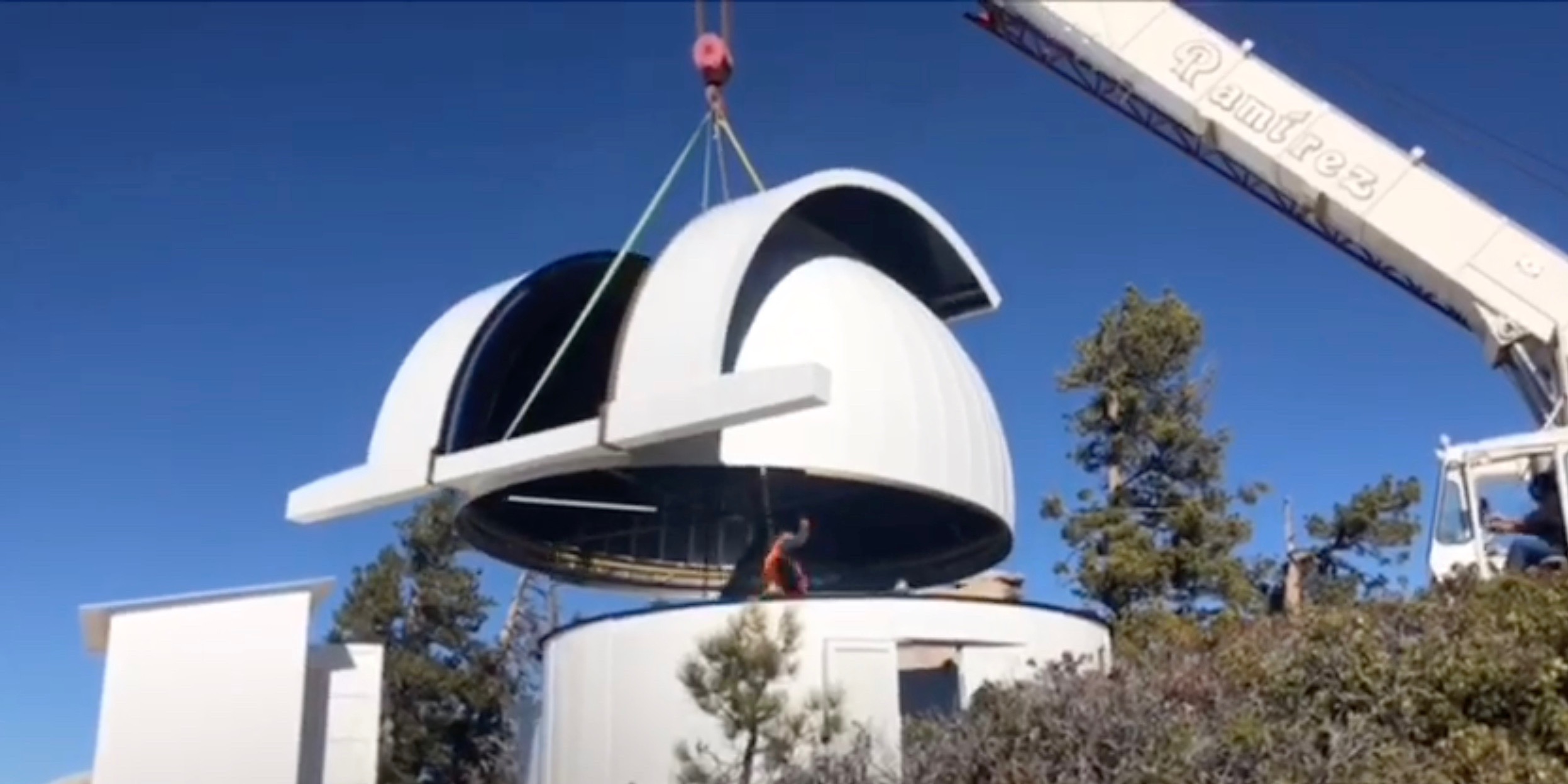
Milestone for SAINT-EX project
SAINT-EX is a 1 meter robotic telescope under construction at the National Astronomical Observatory of Mexico in San Pedro Martir. It is designed to look for earth-sized, potentially habitable planets orbiting ultra-cool stars. The telescope being built by the ASTELCO company is funded by the Center for Space and Habitability CSH at the University of […]
Continue Reading