
Author Archive

Fantasy Basel 2026 – Call for volunteers
Dear PlanetS members and associates, One last time, PlanetS will return to Fantasy Basel – the Swiss Comic-con – and we need you! Increasing again, the event will reach 100 000m2, and we hope it will surpass last year’s record attendance of 97 000 visitors, of whom we interacted directly with approximately 15 000 visitors. The […]
Continue Reading
From dust to planets: a turbulent story
How does fine dust aggregate into building blocks that ultimately form entire planets like our Earth? A research team led by the University of Bern, with the participation of ETH Zurich, the University of Zurich and the National Center of Competence in Research (NCCR) PlanetS has provided the first experimental evidence – obtained during parabolic […]
Continue ReadingSign-up Interfirnity Volunteers
Continue Reading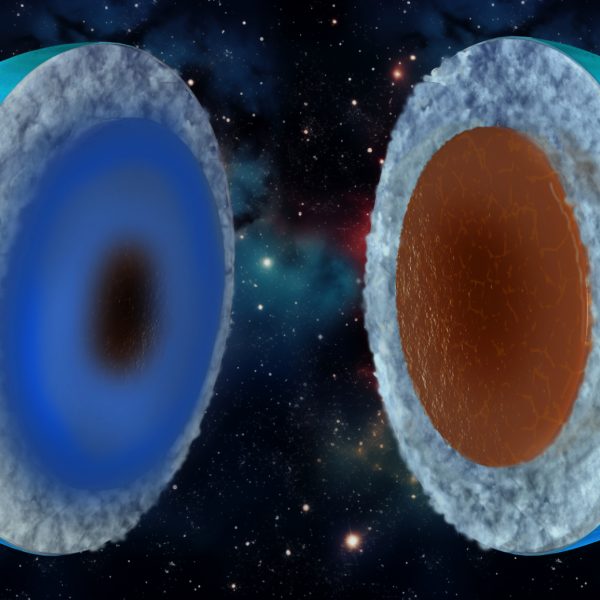
Uranus and Neptune Might Be Rock Giants
A team of researchers from the University of Zurich and the NCCR PlanetS is challenging our understanding of the Solar System planets’ interior. The composition of Uranus and Neptune, the two outer most planets, might be more rocky and less icy than previously thought. The planets in the Solar System are typically divided into three […]
Continue Reading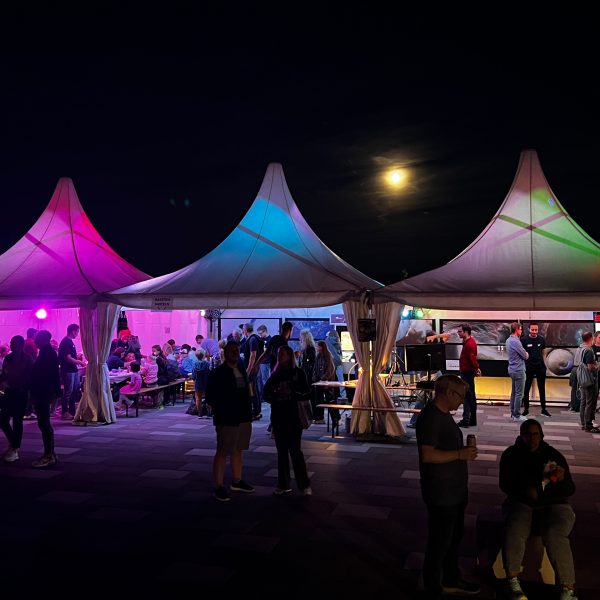
One night, a thousand (space) discoveries – the fascination of the 2025 ‘Nacht der Forschung’
On Saturday, 6 September, the University of Bern became the venue for a very special encounter between science and the public: the Nacht der Forschung (Research Night in English) opened its doors – in sunny weather and pleasant temperatures – and attracted over 10,000 curious visitors. One of the most important topics was space research. […]
Continue Reading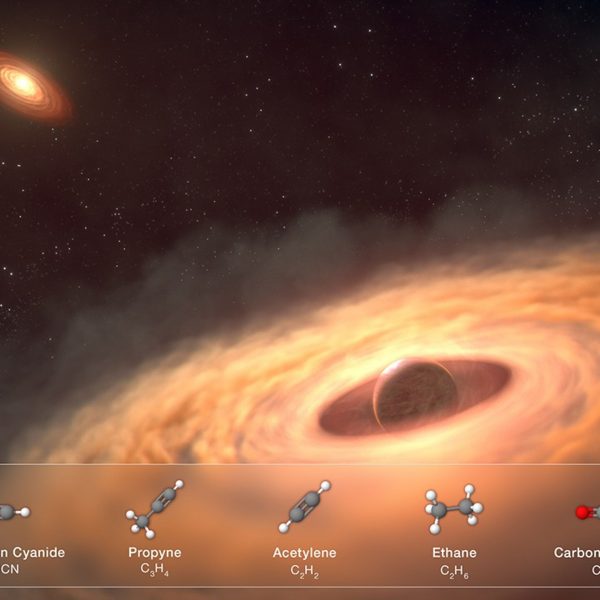
Witnessing the Formation of Moons
NASA’s Webb Telescope is investigating the formation of moons around a massive planet. A team at UZH is using the data to study the chemical composition of a disk that is believed to be the basis for the formation of new moons. NASA’s James Webb Space Telescope has provided the first direct measurements of the […]
Continue Reading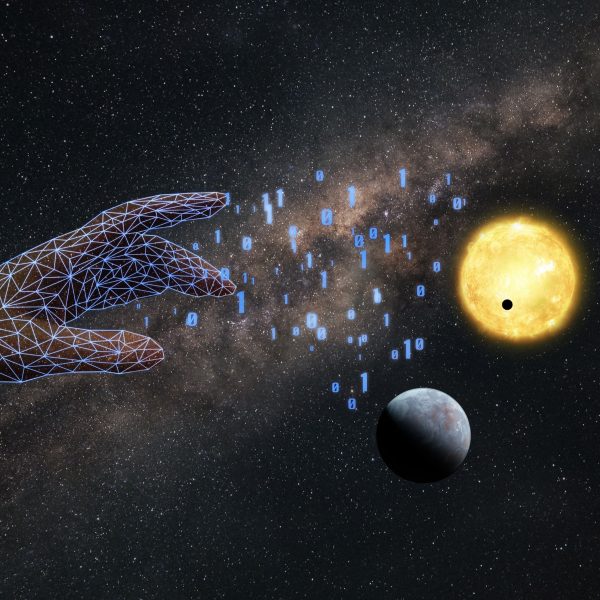
Artificial intelligence drives the discovery of new exoplanets
Researchers from the University of Bern have developed an Artificial Intelligence (AI) model capable of predicting the architecture of planetary systems and subsequently inferring the presence of yet-to-be-discovered planets. They use the so-called Transformer architecture which is the basis of the Large Language Models powering tools like the recently launched Swiss model Apertus or chatbots […]
Continue Reading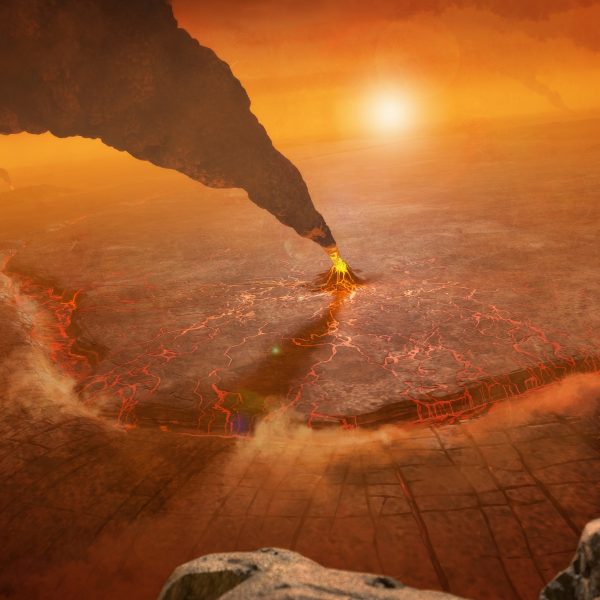
Venus more tectonically alive than we thought
Several tectonic processes are occurring beneath the surface of Venus, according to a new study led by researchers from the University of Bern’s Center for Space and Habitability (CSH) and NASA. They found that many of the numerous “coronae” scattered all over Venus’ globe are associated with gravity field perturbations, hinting at the sub-surface tectonic […]
Continue Reading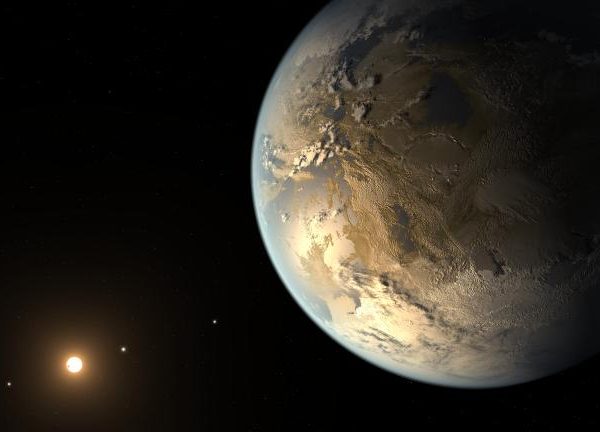
In the search for life on exoplanets, finding nothing is something too
A team led by researchers at ETH Zurich’s Institute for Particle Physics and Astrophysics, and members from the NCCR PlanetS, studied what insights can be gained from a ‘no life detected’ scenario in future exoplanet surveys. What if humanity’s search for life on other planets returns no hits? A team of researchers led by NCCR […]
Continue Reading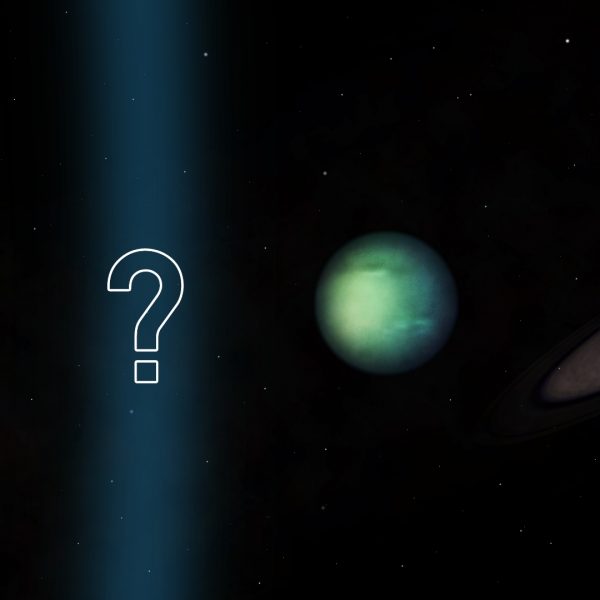
Where to find the next Earth
A team from the University of Bern and the National Centre of Competence in Research (NCCR) PlanetS has developed a machine learning model that predicts potential planetary systems with Earth-like planets. The model could significantly accelerate and thus revolutionize the future search for habitable planets in the universe. The search for Earth-like exoplanets – planets […]
Continue Reading