
News
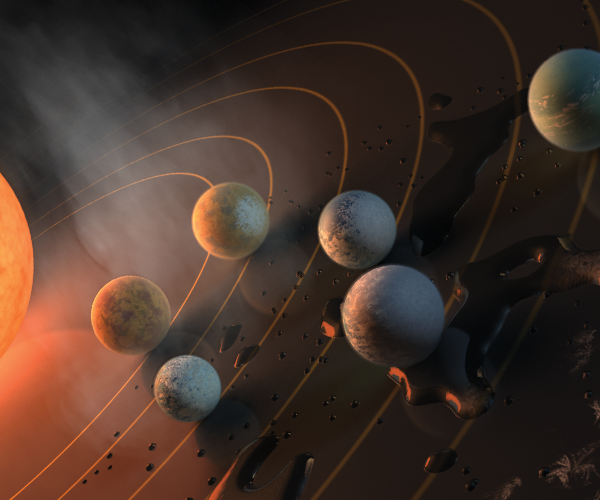
Between eternal night and day, the faces of two cousins of the Earth
An international team including UNIGE and UNIBE maps the climate of rocky exoplanets for the first time using the James Webb space telescope. This artist’s impression displays TRAPPIST-1 and its planets reflected in a surface. The potential for water on each of the worlds is also represented by the frost, water pools, and steam surrounding […]
Continue Reading
Fantasy Basel 2026 – Call for volunteers
Dear PlanetS members and associates, One last time, PlanetS will return to Fantasy Basel – the Swiss Comic-con – and we need you! Increasing again, the event will reach 100 000m2, and we hope it will surpass last year’s record attendance of 97 000 visitors, of whom we interacted directly with approximately 15 000 visitors. The […]
Continue Reading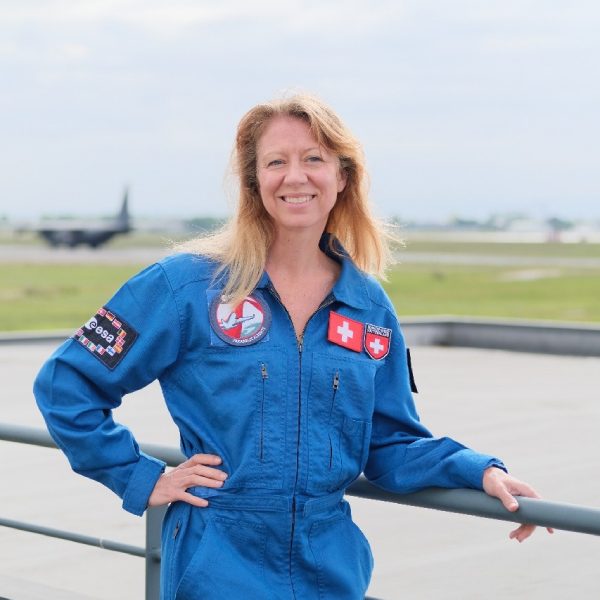
From dust to planets: a turbulent story
How does fine dust aggregate into building blocks that ultimately form entire planets like our Earth? A research team led by the University of Bern, with the participation of ETH Zurich, the University of Zurich and the National Center of Competence in Research (NCCR) PlanetS has provided the first experimental evidence – obtained during parabolic […]
Continue ReadingSign-up Interfirnity Volunteers
Continue Reading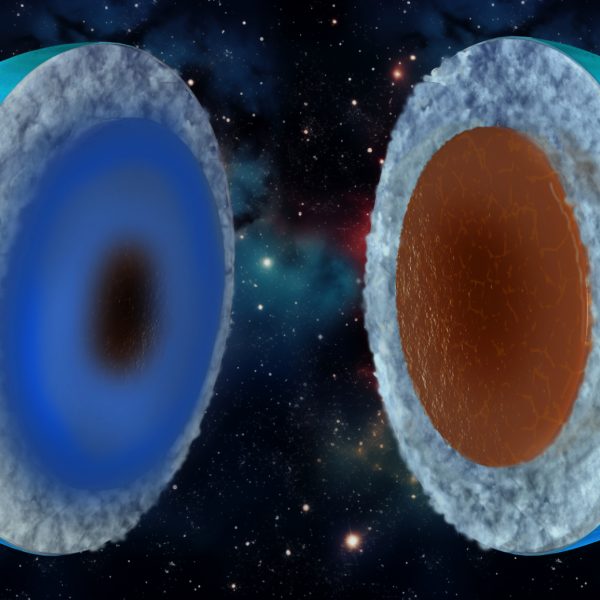
Uranus and Neptune Might Be Rock Giants
A team of researchers from the University of Zurich and the NCCR PlanetS is challenging our understanding of the Solar System planets’ interior. The composition of Uranus and Neptune, the two outer most planets, might be more rocky and less icy than previously thought. The planets in the Solar System are typically divided into three […]
Continue Reading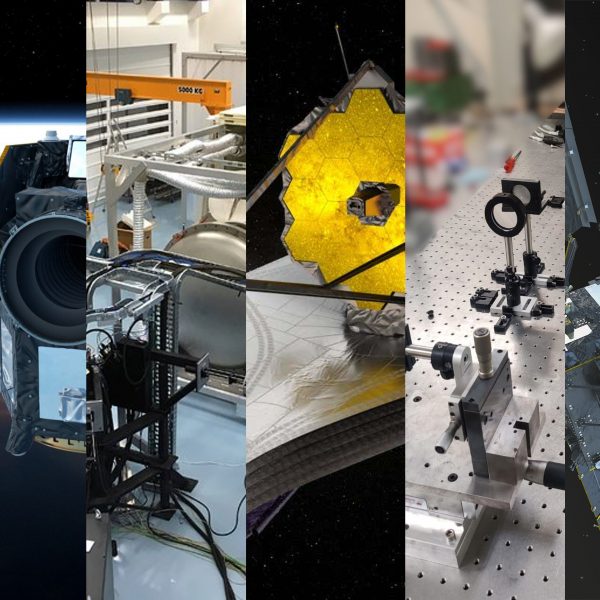
A New National Conference Brings Engineers and Scientists Together
The first national conference “Swiss Innovation for Astrophysics and Planetary Science” will take place in Bern from 20–22 January 2026, hosted by the Technology and Innovation Platform of NCCR PlanetS. The event will spotlight the development of technology and software for ground- and space-based telescopes, scientific instruments, and planetary exploration. Its unique focus is on […]
Continue Reading
Interview with PlanetS Alumni – Kaustubh Hakim
Kaustubh Hakim is passionate about understanding the chemistry of exoplanets. He is currently a research staff member at KU Leuven and the Royal Observatory of Belgium. He did a long-term postdoc at the University of Bern between 2019 and 2023. Before that, he obtained a PhD in Astrophysics and Geochemistry from the University of Amsterdam […]
Continue Reading
Interview with PlanetS Alumni – Andrin Kessler
Andrin’s journey started with a PhD with PlanetS after studying Theoretical Physics at the University of Bern. For four years, he researched the formation of planets using computer models as part of the Theoretical Astrophysics Group in Bern. He has recently chosen to leave academia, but he is still working on modelling the real world. […]
Continue Reading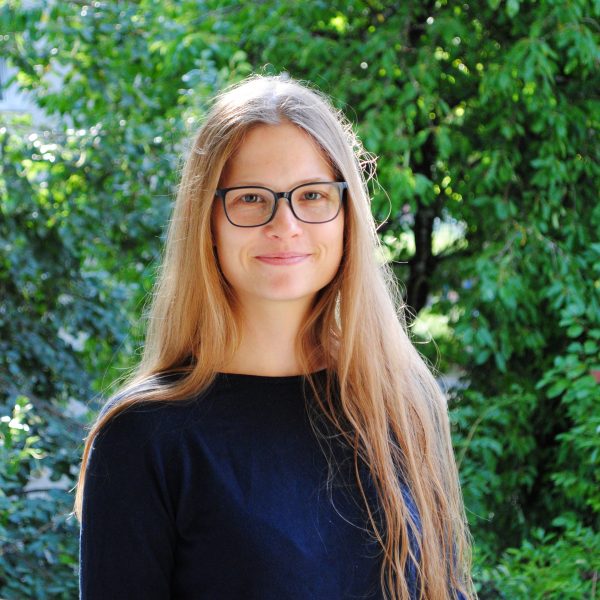
Interview with PlanetS Alumni – Caroline Haslebacher
A nice anecdote she shared with us? “I am the kind of person who asks what the ‘S’ in PlanetS stands before even officially becoming a member.” Dr. Caroline Haslebacher is passionate about fractures in Europa’s ice shell and applies deep learning models to study them. She graduated with a PhD in Physics from the […]
Continue Reading
Interview with PlanetS Alumni – Emily Rickman
Dr. Emily Rickman is an astrophysicist for the European Space Agency (ESA) based at the Space Telescope Science Institute (STScI) in Baltimore, USA. STScI is home to the mission operations for the James Webb Space Telescope (JWST) and the Hubble Space Telescope (HST) of which Dr. Rickman serves as a science team member. She was […]
Continue Reading