
STP13: Earth science collection data at the Naturmuseum St.Gallen
Finding an Externship
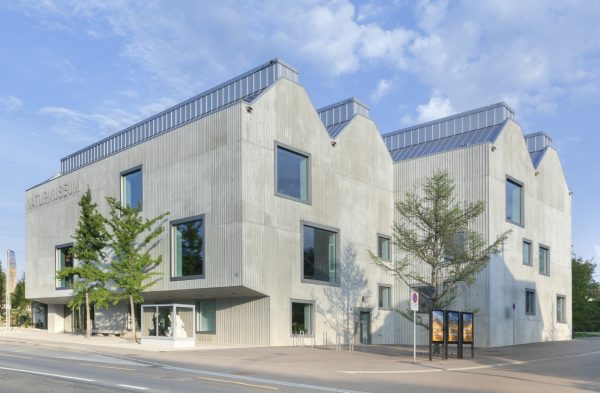
I had been interested in completing a PlanetS externship for a long time because it sounded like a great opportunity to apply my skills in a non-academic setting. I’ve been interested in museum work since my PhD and was hoping to find an externship where I could get a taste for the day-to-day work at a museum. In spring 2025, I contacted the Director of Naturmuseum St.Gallen to explore whether there was a meaningful project at the interface of collections work and digital innovation. We developed the project together with the Technology and Innovation Platform and I started the externship in November 2025.
Natural history collections are going through a digitization journey
Natural history collections are the central assets of museums. They underpin research, shape exhibitions, enable research loans and collaborations, and provide the material for education and outreach. Switzerland’s museums, universities, and botanical gardens collectively care for more than 60 million natural history specimens, spanning biological and geological materials. About one in five of these objects have been digitized and biological collections are searchable through a web portal. The geological collections are also being digitized but very few of those records are publicly available.
Placing the externship within the digitalization journey
The initial goal of the project was to construct a web portal to make the collections of meteorites within Swiss museums searchable. However, the landscape changed between the time when the project was first proposed and the time at the externship. Now, the Swiss museums are collectively planning a platform to mobilize Earth science collection data. I therefore took on an active role in the requirements collection for the shared web portal. I developed a requirement gathering plan and ran a survey aimed at researchers to understand how they currently use Earth science collections, what prevents efficient use, and what they would prioritize in a future national platform. I also participated in workshops, where we compared perspectives across institutions and discussed practical constraints such as resourcing and governance. In one workshop contribution, I presented a synthesis of researcher wishes for a future digital platform. To better understand the fundamentals of collection work and the digitizing process I also digitized forty meteorites and entered them into the collection at Naturmuseum St Gallen.
I soon realized that there is a potential to drastically increase the value of digital collections to both the public and researchers by leveraging published research results and AI. I envisioned a chat-with-the-collection feature that would return science-backed stories and facts about objects, transforming the digital collections from ledgers to interactive knowledge hubs. To develop this vision into a concrete action plan was an opportunity for me to deliver real value to Swiss museums and their users, so I spend a significant portion of the externship on this.
From digitization to interaction
The digitization outcomes result in interfaces that look like inventories: lists of objects, locations, and metadata fields. You’re not far off if you’re envisioning a card catalogue from a library. It is necessary infrastructure, but it doesn’t communicate the scientific meaning of a specimen.
Many specimens have compelling scientific narratives, but these narratives are hard to access because they live in curator expertise, specialized literature, and fragmented documentation. My key idea was therefore to augment digital collections with a science grounded conversational interface: a chatbot that allows users to ask questions and receive answers tied directly to collection records and published scientific works.
In this model, visitors will be able to explore a meteorite or mineral through guided questions, while researchers could use the same interface to accelerate discovery, locate comparable samples, and navigate associated documentation. It also creates a natural way to bring collections into exhibitions, where the system can act as a personalized guide for different levels of prior knowledge.
Innovation proposal and future outlook
Once I had the vision, I started working on a proposal to attract funding to conduct the work. After investigating different funding possibilities, I decided to target innovation project funding from Innosuisse. I applied and was approved an innovation mentor from Innosuisse to develop the project. The mentor helped me to refine the value proposition. It was an interesting experience to prepare an Innosuisse grant as it is quite different from pure research project funding. I had to, for example, develop a long-term business plan and justify the project in terms of cost-benefit analysis for both monetary and qualitative value to Swiss society. The proposal is currently under review. I think that it is a very exciting project and hope to be able to continue working on it soon.
This experience has shown me that there is a lot of exciting things in the works at museums in Switzerland. I’ve had the opportunity to be immersed in the everyday work a natural history museum and to shape the future of digital collections in Switzerland. It has also been a rewarding experience to develop an AI strategy for bringing collection objects to life and to write a business style proposal, switching focus from scientific discovery to value creation.