
News
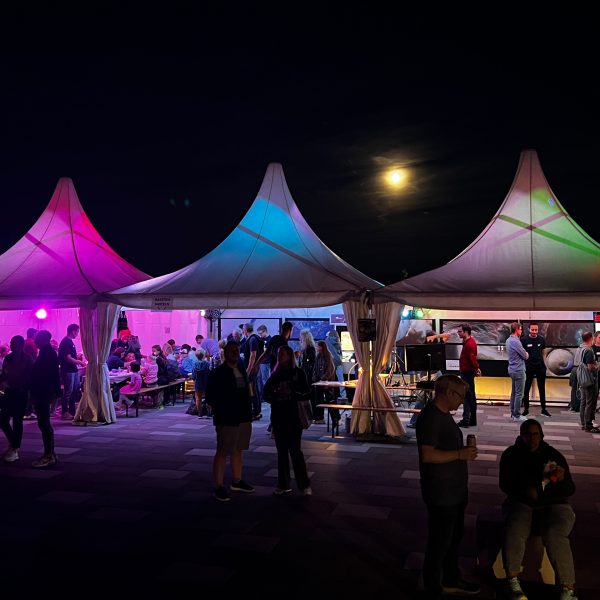
One night, a thousand (space) discoveries – the fascination of the 2025 ‘Nacht der Forschung’
On Saturday, 6 September, the University of Bern became the venue for a very special encounter between science and the public: the Nacht der Forschung (Research Night in English) opened its doors – in sunny weather and pleasant temperatures – and attracted over 10,000 curious visitors. One of the most important topics was space research. […]
Continue Reading
30 years ago
Exactly 30 years ago, on October 6, 1995, the University of Geneva Observatory changed our view of the world with the announcement by two scientists, Michel Mayor and Didier Queloz, of the discovery of the first planet orbiting a star other than the Sun. However, it was in the 1970s that Geneva scientists began developing […]
Continue Reading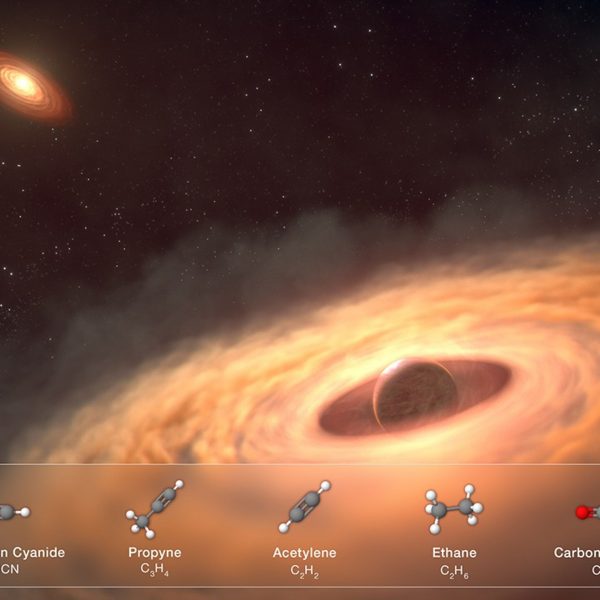
Witnessing the Formation of Moons
NASA’s Webb Telescope is investigating the formation of moons around a massive planet. A team at UZH is using the data to study the chemical composition of a disk that is believed to be the basis for the formation of new moons. NASA’s James Webb Space Telescope has provided the first direct measurements of the […]
Continue Reading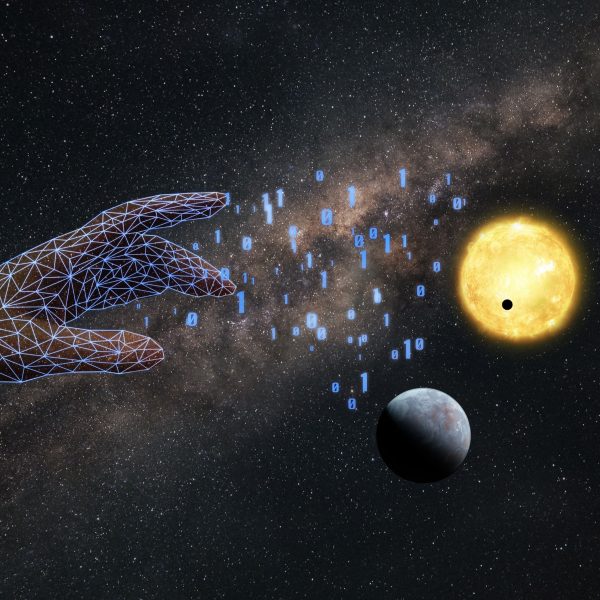
Artificial intelligence drives the discovery of new exoplanets
Researchers from the University of Bern have developed an Artificial Intelligence (AI) model capable of predicting the architecture of planetary systems and subsequently inferring the presence of yet-to-be-discovered planets. They use the so-called Transformer architecture which is the basis of the Large Language Models powering tools like the recently launched Swiss model Apertus or chatbots […]
Continue Reading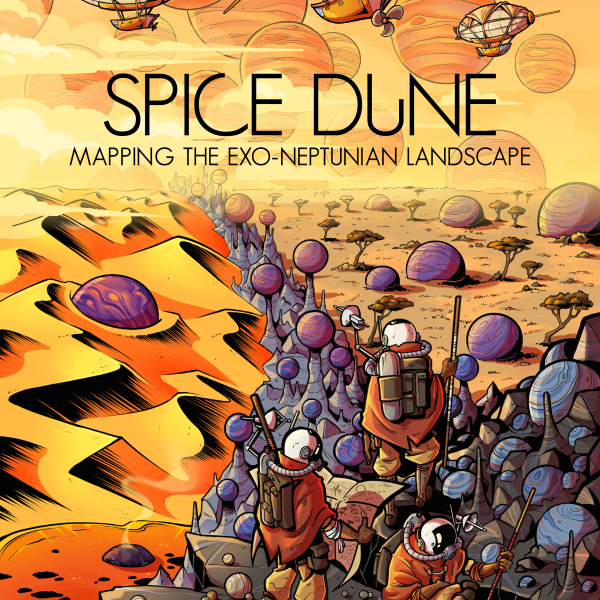
The ATREIDES program in search of lost exo-Neptunes
An international scientific team led by the University of Geneva (UNIGE), including members of the UNIGE Astronomy Department, the National Centre of Competence in Research PlanetS, the University of Warwick, and the Instituto de Astrofísica de Canarias, has launched an ambitious program to map exoplanets located around the Neptunian Desert in order to better understand […]
Continue Reading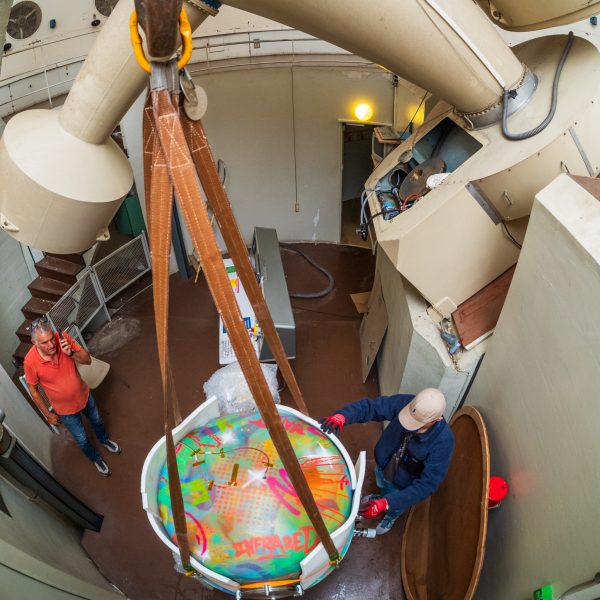
NIGHT – A new instrument to detect Helium in exoplanet atmosphere
The NIGHT (Near-Infrared Gatherer of Helium Transits) project is an instrument constructed at the Department of astronomy of the University of Geneva by members of the NCCR PlanetS, that will be used to study the near-infrared atmosphere of exoplanets during their transit. Helium indeed absorbs a thin band of infrared colours, enabling astronomers to detect […]
Continue Reading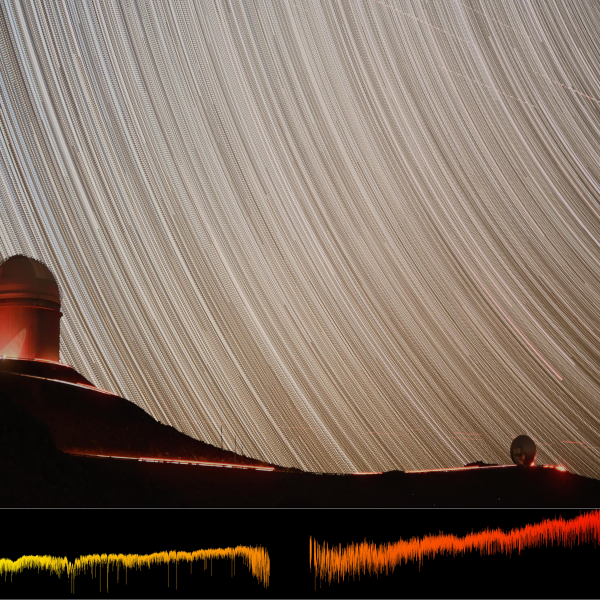
NIRPS, a new eye on the sky in Chile
An international team led by the Universities of Geneva (UNIGE) and Montreal has published the first results from the NIRPS spectrograph installed on the European Southern Observatory’s (ESO) 3.6-meter telescope in La Silla, Chile. This new instrument, which operates in the near infrared, offers exceptional performance in detecting and characterising exoplanets, particularly around red dwarfs. […]
Continue Reading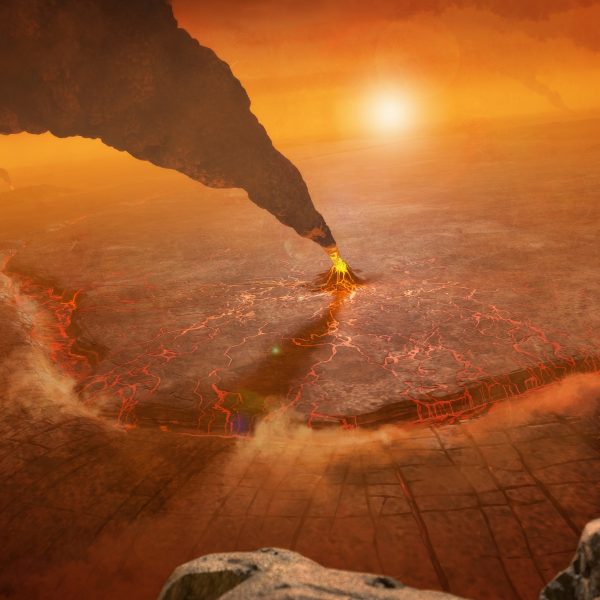
Venus more tectonically alive than we thought
Several tectonic processes are occurring beneath the surface of Venus, according to a new study led by researchers from the University of Bern’s Center for Space and Habitability (CSH) and NASA. They found that many of the numerous “coronae” scattered all over Venus’ globe are associated with gravity field perturbations, hinting at the sub-surface tectonic […]
Continue Reading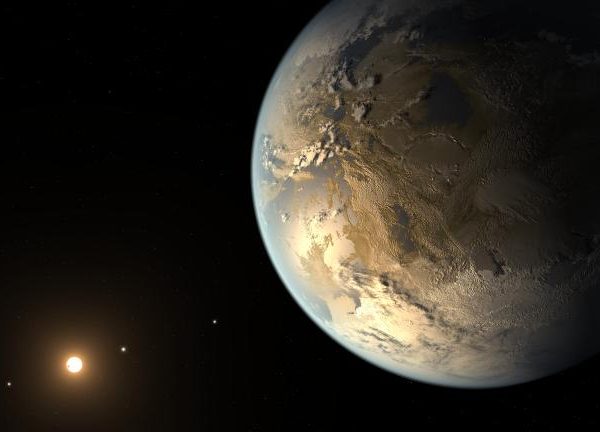
In the search for life on exoplanets, finding nothing is something too
A team led by researchers at ETH Zurich’s Institute for Particle Physics and Astrophysics, and members from the NCCR PlanetS, studied what insights can be gained from a ‘no life detected’ scenario in future exoplanet surveys. What if humanity’s search for life on other planets returns no hits? A team of researchers led by NCCR […]
Continue Reading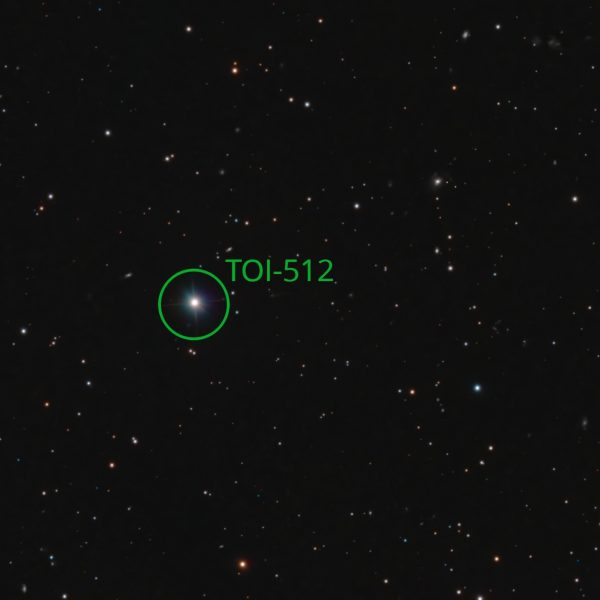
Observational tango reveals a Super-Earth
An international team, including researchers from the University of Geneva (UNIGE) and the National Research Centre PlanetS, announces the discovery of a new super-Earth around a star slightly cooler than our Sun. Once again, the high-precision spectrograph ESPRESSO – designed and developed under the direction of the UNIGE – has made this discovery possible. The […]
Continue Reading