Disks & Planets
Introduction
Project Leader: Prof. Hans Martin Schmid
We aim to observationally attack two questions central to the formation and evolution of planetary systems:
- What are the initial conditions of planet formation and how do the systems evolve dynamically?
- Where, when, and how frequently do giant planets form around normal stars?
Sub-Projects
Initial Conditions, Structure, and Evolution of Circumstellar Disks
Prof. Hans Martin Schmid
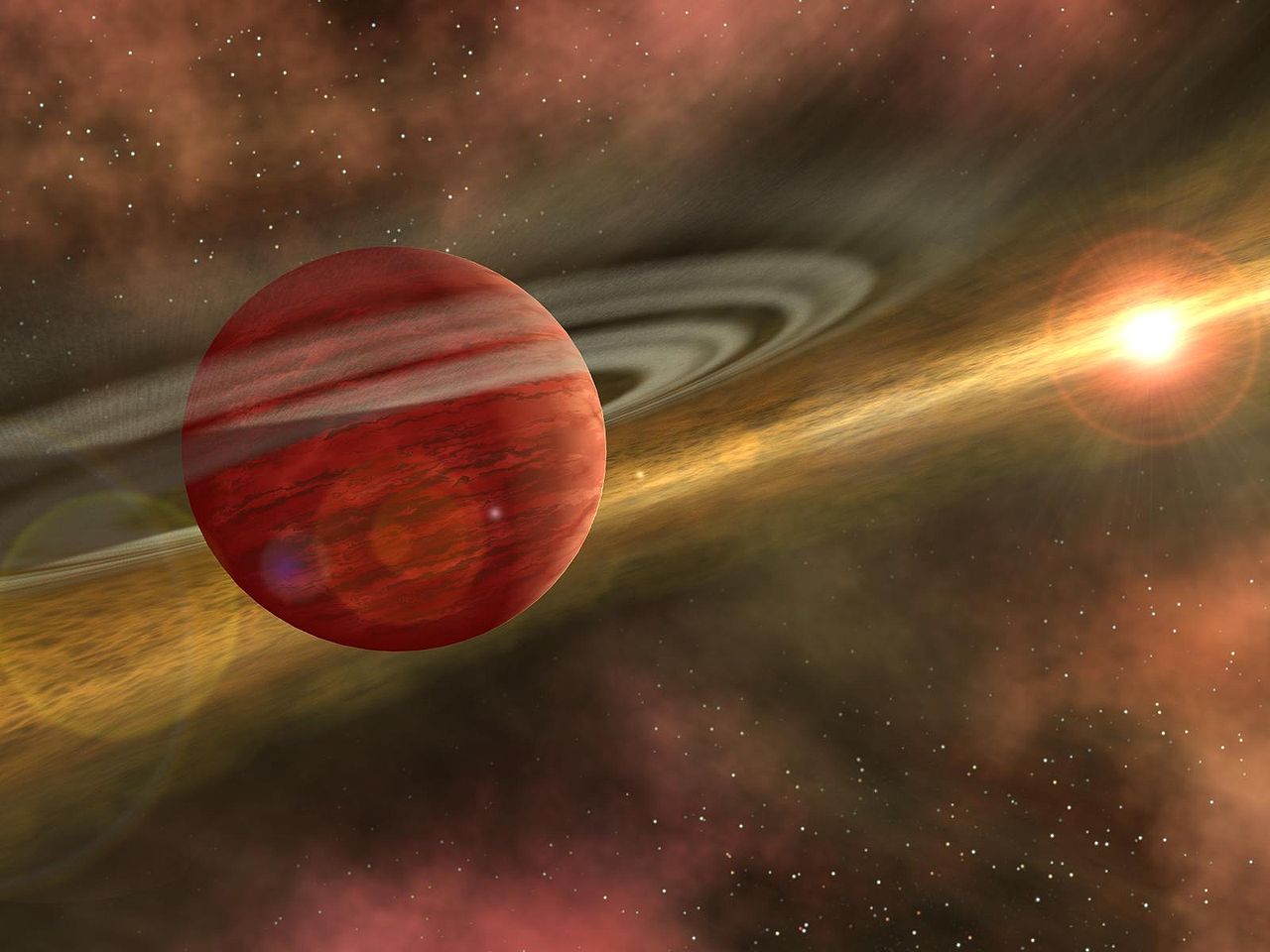
Our approach to the first question requires combination of direct images of circumstellar discs (in thermal emission as well as scattered starlight) with analyses of their emergent spectral energy distributions (SED), to understand the geometric distribution of dust (as a function of grain size and composition) around stars (0.5 M ¤ to 2.5 M ¤ ), as a function of time (1 Myr to several Gyr).
Detection and Characterization of Exoplanets
Dr. Sascha Quanz
Our approach to the second question will be to exploit ground-based adaptive optics imaging surveys (e.g., NACO-VLT, SPHERE, ERIS), mainly by investing in new exoplanet detection algorithms, in order to directly image and characterize exoplanets not accessible to the radial velocity (RV) and transit techniques, and complementary to future results of the CHEOPS Project.