
News
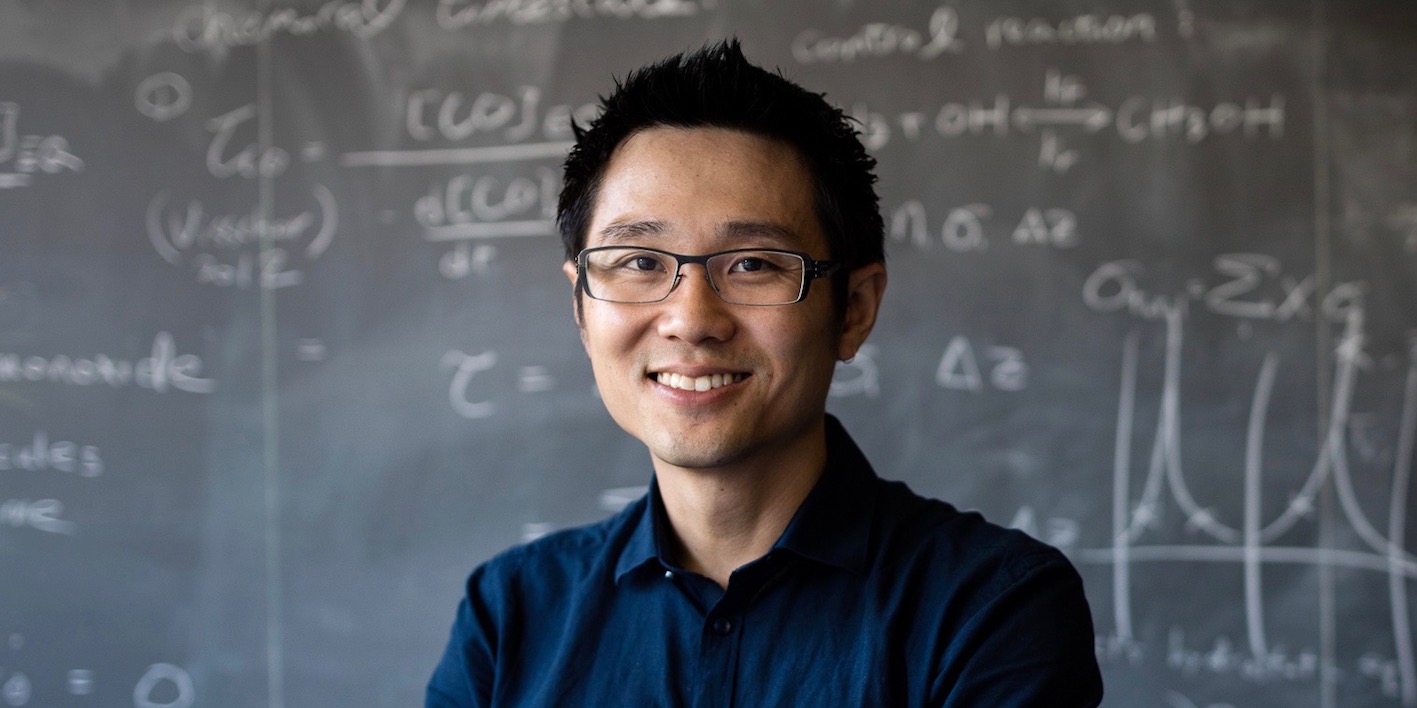
“Writing is very close to my heart”
With two prestigious awards, conferred at the end of 2017, Kevin Heng started an exciting year. The professor at the Center for Space and Habitability (CSH) of the University of Bern and member of the NCCR PlanetS received a grant by the European Research Council (ERC) and a writing prize by the American Astronomical Society […]
Continue Reading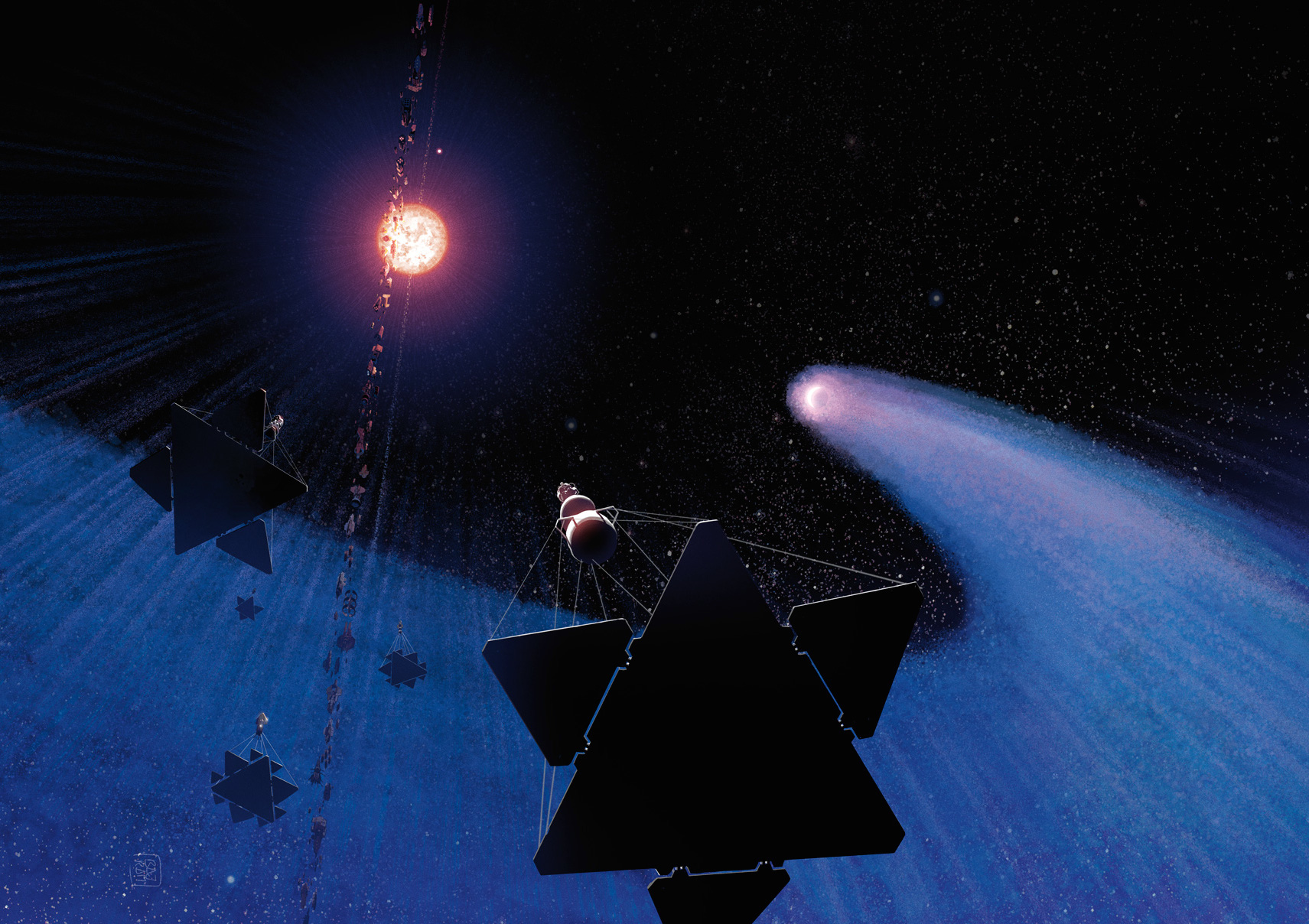
Orbital mayhem around a red dwarf
Astronomers members of PlanetS, discovered that the GJ436b, nicknamed “the comet-like exoplanet” because it evaporates like a comet, follows a very special elliptical orbit over the poles of its star. In the collective imagination, planets of a solar system all circle around their star, in the same plane that is also the equatorial plane of […]
Continue Reading
Perseverance and dedication
Dear Reader, In this edition of the Observer, you will read among other about the history of CHEOPS, the tribulations leading to the first light of ESPRESSO, and about the legacy of the Cassini mission. These stories illustrate that great projects are made possible by perseverance and dedication. What appears simple and evident after the […]
Continue Reading
First light of ESPRESSO
The new ultra-high resolution spectrograph developed by a consortium led by Francesco Pepe professor at the Department of Astronomy of the Geneva University and member of PlanetS observed its first star successfully. Installed at ESO’s Very Large Telescope (VLT) site in Chile, ESPRESSO will look for tiny changes in the speed of stars, sign of […]
Continue Reading
“I’m like the oil in the engine”
The Council of the European Southern Observatory (ESO) has elected Willy Benz, Professor at the University of Bern, as its next president. The Council, which is composed of the delegates from the ESO member states, is the organisation’s ruling body and makes strategic decisions on its behalf. PlanetS: What will your role as president of […]
Continue Reading
Astronomy in your wallet
There is a good chance that you are carrying 51 Pegasi around with you. The name of the star, around which the Geneva astronomers Michel Mayor and Didier Queloz discovered a planet in 1995, is on the new Swiss 20 franc banknote. In addition, there is a ten-digit number – an example of Swiss banking […]
Continue Reading
A visit of the ice lab
What do the images of Mars, Comet Chury or other celestial bodies really show? For a reliable answer researchers at the University Bern study the optical properties of dust-ice mixtures that are analogs of planetary or cometary surfaces. Have a look at their laboratory.
Continue Reading
Building planets as sandcastles
Planetary formation starts with small dust grains in disks surrounding young stars. But dust growth is hindered by collisional fragmentation and radial drift. So, how are the larger planetesimals, the building blocks of planets, formed? This is still an open question. Now, scientists of PlanetS have found a mechanism bridging the gap between the early […]
Continue Reading
New insights into the Earth’s formation
Meteorites contain far less chlorine, bromine and iodine than previously thought. This was the finding from new measurements carried out by a team of international researchers. The new result allows some interesting conclusions to be drawn about the Earth’s formation: there were phases with an abundance of volatile elements on the Earth’s surface right from […]
Continue Reading
The history of CHEOPS
Engineers at the University of Bern are developing the CHEOPS space telescope. From Earth´s orbit, this telescope is supposed to measure the diameter of exoplanets which are light-years away from us and pass in front of their host star. Swiss astronomers had the idea for CHEOPS back in 2008. Willy Benz, professor at the Physics […]
Continue Reading