
News

Artificial Intelligence joins Astrobiology
Tackling humanity’s biggest challenges with Artificial Intelligence: Uni Bern scientist at NASA’s Frontier Development Lab For the third time since 2016 machine learning experts and space scientists will spend the summer in Silicon Valley to work on some of NASA’s most important present day challenges. The 8 week long program – NASA frontier development lab […]
Continue Reading
The Space Group of Ecsite visits the Geneva Observatory
Ecsite is an annual international conference that brings together the majority of mediators and other scientific representatives of European museums. This year Ecsite was held in Geneva where no less than 1200 people had made the trip. As is the tradition, the conferences and workshops are preceded by pre-conferences organised by the different Ecsite member […]
Continue Reading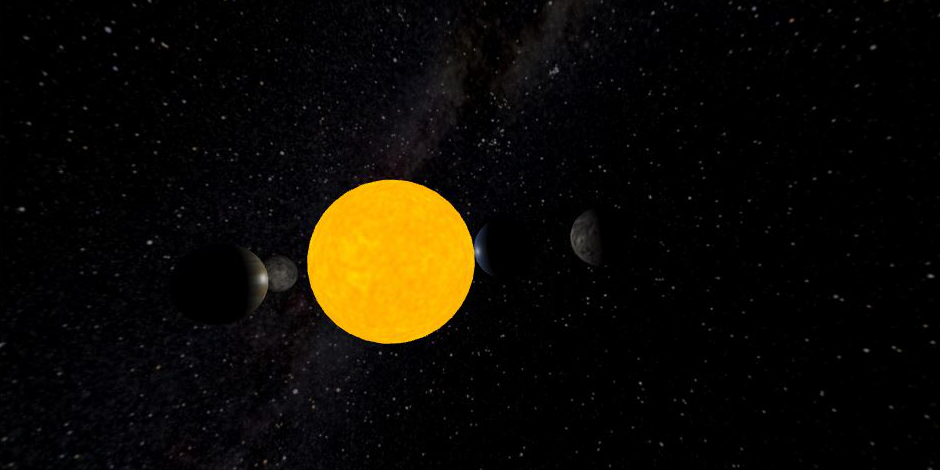
HD 45364
HD 45364 is an extrasolar system located 107 light-years away in the constellation Canis Major (the Greater Dog). The central star is an yellow dwarf (spectral type G8V), a little smaller the Sun (0.88 solar masses, 0.82 solar radii) and of similar temperature (5270 °C, compared to 5500 °C for the Sun). With a visual […]
Continue Reading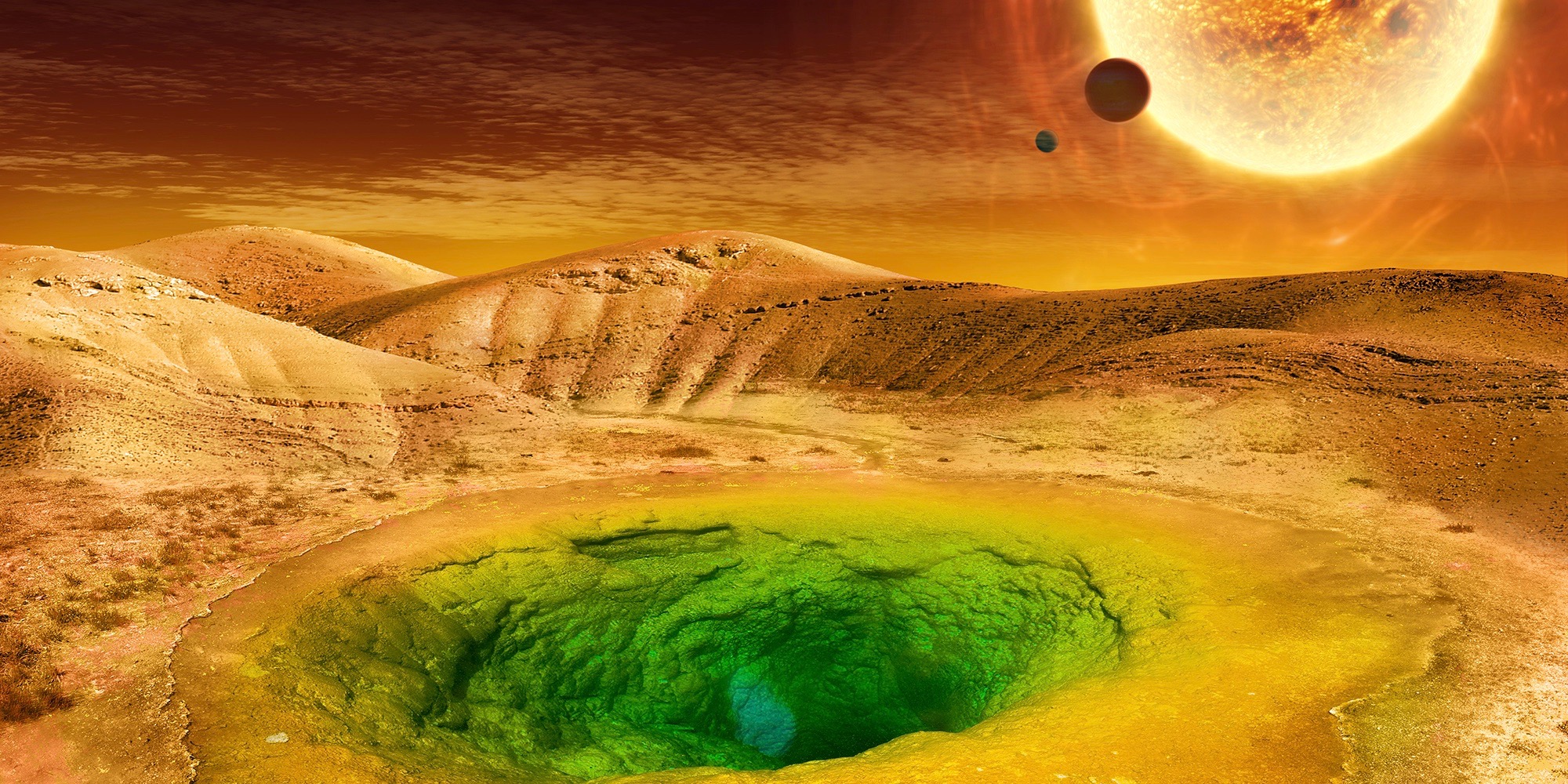
How to find signs of life in space
Astrophysicists of the NCCR PlanetS contributed to a series of NASA papers that lay out strategies to search for signs of life beyond our solar system. They assume that the detection of atmospheric signatures of a few potentially habitable planets may possibly come before 2030. Three years ago, NASA has gathered researchers from around the […]
Continue Reading
Where Medical Technology and Astrophysics Meet
At the University of Bern, astrophysicists of the Center for Space and Habitability (CSH) teamed up with medical technology researchers to develop a new method to analyse spectra of atmospheres of planets beyond our solar system. The unusual collaboration applied an artificial intelligence tool to study the chemistry of exoplanetary atmospheres. When Kevin Heng, director […]
Continue Reading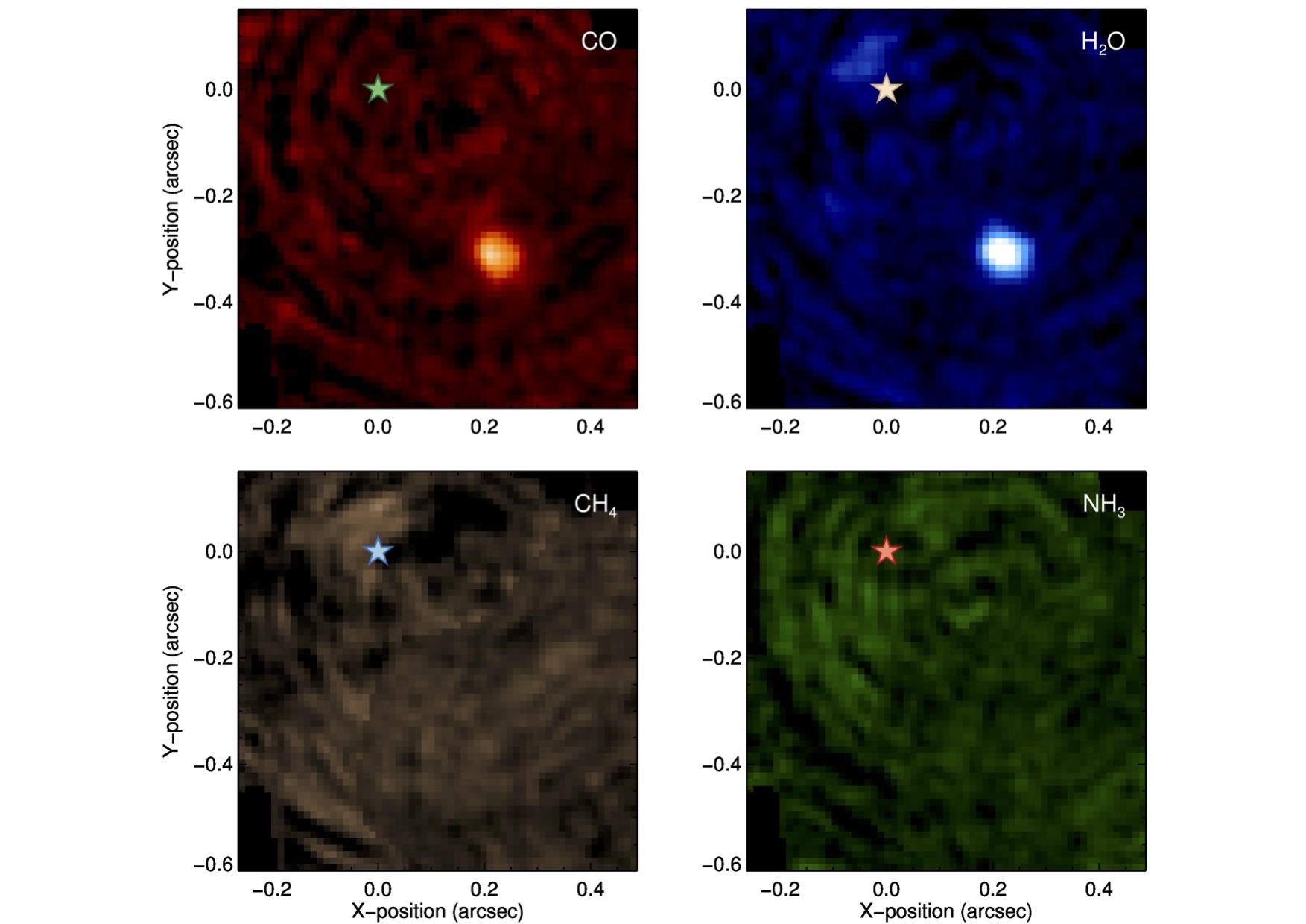
Hunting molecules to find planets
Each exoplanet revolves around a star, like the Earth around the Sun. This is why it is generally impossible to obtain images of an exoplanet, so dazzling is the light of its star. However, a team of astronomers, led by a researcher from the University of Geneva (UNIGE), had the idea of detecting certain molecules […]
Continue Reading
Real added value
By Francesco Pepe On May 29th and 30th PlanetS will have its 4th Site Visit. This important event is concurrent with the end of the first phase of the NCCR, and may be an occasion to make a step back, breath and … meditate: Where would Planetary Science in Switzerland stand today without PlanetS? What […]
Continue Reading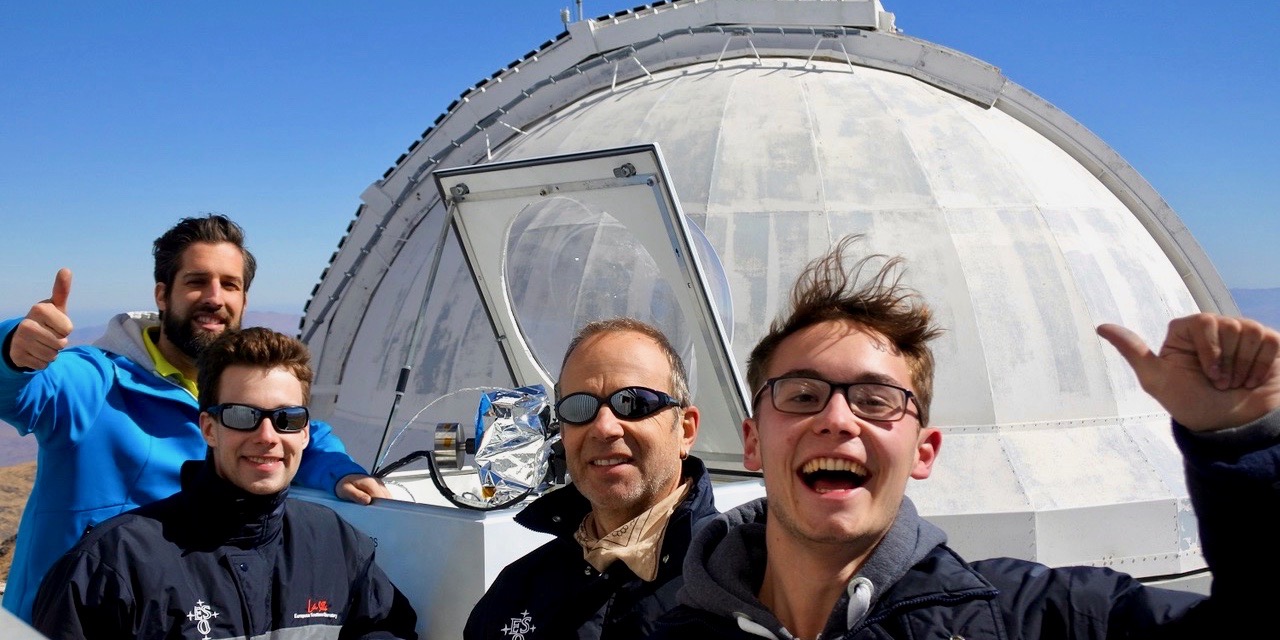
Observing the Sun to detect planets
The detection of small exoplanets like the Earth is subject to many difficulties, in particular those introduced by the intrinsic variation of the star which can be confused with the presence of a planet. An international team of astronomers and engineers, led by scientist from the University of Geneva (UNIGE) and member of PlanetS, has […]
Continue Reading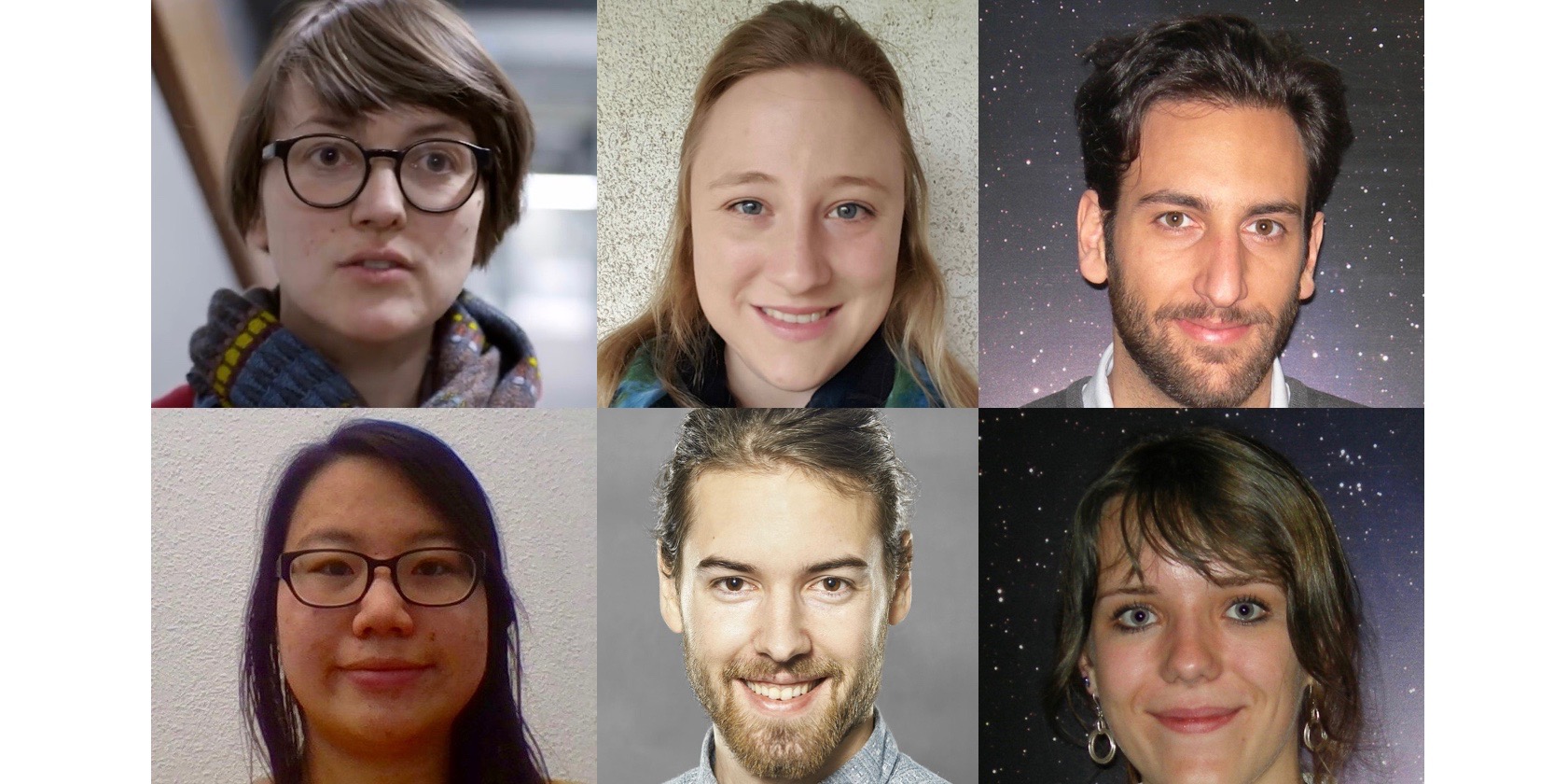
“We are the majority of PlanetS”
Currently attached to the NCCR PlanetS are 56 PhDs, 46 PostDocs, 32 Senior Scientists, and 18 permanent positions. To make their concerns heard, the young scientists joined forces and elected representatives. Caroline Dorn is one of them: “I think, the way how we do science is effecting what we do in science. That’s something to keep […]
Continue Reading
Interculturality and Diversity
By Nadine Afram How diverse is PlanetS? How many cultures do we bring together at PlanetS? If we speak in terms of nationalities of NCCR members, we gather approximately 130 persons of 30 different nationalities, and a multitude of languages. Like in many research environments, this is not unusual. In a broader sense, many more […]
Continue Reading