National Centre of Competence in Research PlanetS
Gesellschaftsstrasse 6 | 3012 Bern | Switzerland
  +41 31 684 32 39

Disks & Planets

Introduction

Project Leader: Prof. Hans Martin Schmid

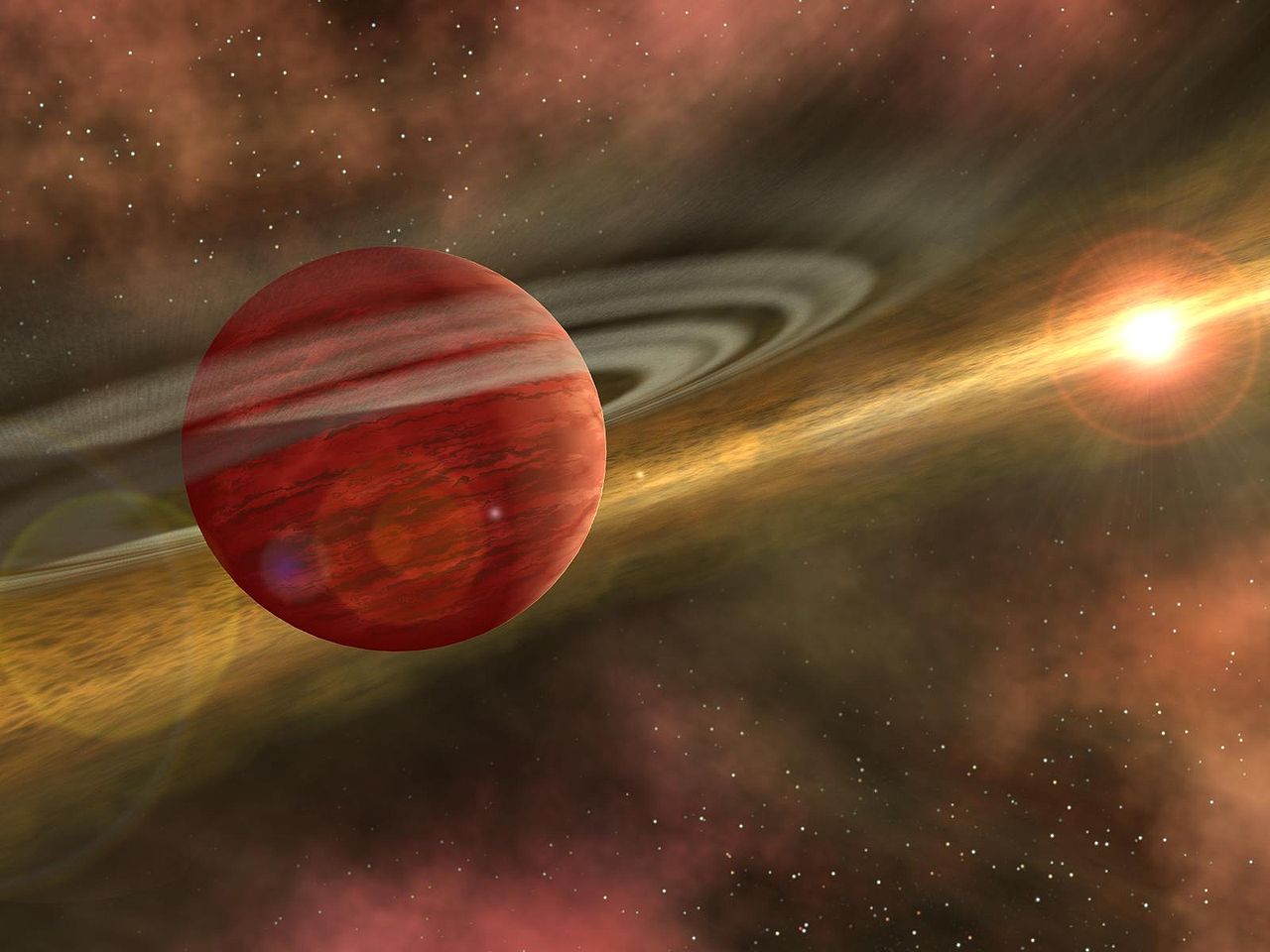
We aim to observationally attack two questions central to the formation and evolution of planetary systems:

  1. What are the initial conditions of planet formation and how do the systems evolve dynamically?
  2. Where, when, and how frequently do giant planets form around normal stars?
 

1280px-Planet_formation


Sub-Projects

Initial Conditions, Structure, and Evolution of Circumstellar Disks

Prof. Hans Martin Schmid

Our approach to the first question requires combination of direct images of circumstellar discs (in thermal emission as well as scattered starlight) with analyses of their emergent spectral energy distributions (SED), to understand the geometric distribution of dust (as a function of grain size and composition) around stars (0.5 M ¤ to 2.5 M ¤ ), as a function of time (1 Myr to several Gyr).

Detection and Characterization of Exoplanets

Dr. Sascha Quanz

Our approach to the second question will be to exploit ground-based adaptive optics imaging surveys (e.g., NACO-VLT, SPHERE, ERIS), mainly by investing in new exoplanet detection algorithms, in order to directly image and characterize exoplanets not accessible to the radial velocity (RV) and transit techniques, and complementary to future results of the CHEOPS Project.

 

News

Team

Posts

Uranus und Neptun könnten Gesteinsriesen sein

Uranus und Neptun könnten Gesteinsriesen sein

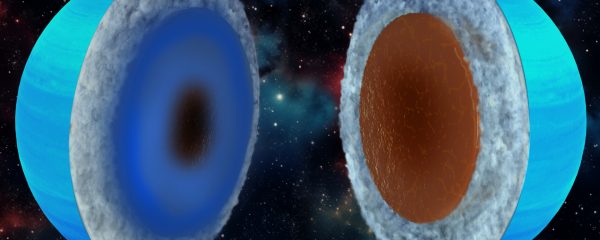
Ein Forschungsteam der Universität Zürich und des NCCR PlanetS stellt das bisherige Verständnis vom Inneren der Planeten des Sonnensystems in Frage. Die Zusammensetzung von den beiden äussersten Planeten Uranus und Neptun könnte felsiger und weniger eisig sein als bisher angenommen. Die acht Planeten unseres Sonnensystems werden in der Regel anhand ihrer Zusammensetzung in drei Kategorien […]

Continue Reading
Eine Nacht, tausend (Weltraum-) Entdeckungen –  so faszinierte die «Nacht der Forschung» 2025

Eine Nacht, tausend (Weltraum-) Entdeckungen – so faszinierte die «Nacht der Forschung» 2025

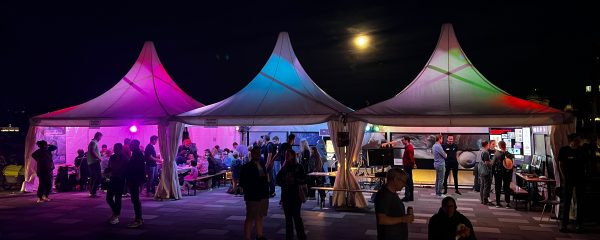
Am Samstag, 6. September, wurde die Universität Bern zum Schauplatz für eine ganz besondere Begegnung zwischen Wissenschaft und Öffentlichkeit: Die Nacht der Forschung öffnete ihre Türen – bei sonnigem Wetter und angenehmen Temperaturen – und zog über 10’000 neugierige Besucherinnen und Besucher an. Eines der wichtigsten Themen war die Weltraumforschung. Alle drei Jahre bietet die […]

Continue Reading
Bringing the Digital Revolution to Direct Exoplanet Imaging with PLACID’s LCD Technology

Bringing the Digital Revolution to Direct Exoplanet Imaging with PLACID’s LCD Technology

A game-changing instrument is set to improve the detection and direct imaging of planets outside our Solar System by harnessing the power of liquid crystals. The Programmable Liquid-crystal Active Coronagraphic Imager for the DAG telescope (PLACID) was installed earlier this year at the 4m-diameter telescope of the newly-built Eastern Anatolian Observatory (DAG) observatory in Eastern […]

Continue Reading

Gefällt dir was du siehst ? Teile es!

Share Share Save Share Email