Planet Properties & System Architectures
Multi-faceted determination of planet properties and system architecture
Project Leader: S. Udry
Since the detection of the first planet orbiting another solar-type star than our Sun, our knowledge about exoplanets has dramatically increased thanks to the systematic monitoring of large star samples by various detection techniques (radial velocities, photometry, micro-lensing, and recently direct imaging). The results bring valuable constraints to planet formation theories, models of planet interior structure, and atmosphere physics. Basic planetary parameter measurements are the primary vehicles for the acquisition of the understanding of the interaction between the inner structure and the atmosphere of a planet, a key element for a complete picture of its ecological system.
The strongest constraints are achieved when different kinds of observations providing complementary information are combined together and confronted with theoretical predictions. In this project, we wish to set-up an ambitious long-term research plan based on comprehensive ground and space-based high- quality observations, including the development of (new) constraints from theoretical modelling of the systems, and developing high-level tools to optimally combine the variety of available information, of potentially different intrinsic nature (observational, theoretical, numerical), solving the challenges linked with the smaller amplitudes of the signals to detect as we go towards smaller-mass planets, in order to provide the optimal basic information to advance our understanding of the formation, structure, and eventually habitability of planetary systems.
With this goal in mind, the project is organized along several main lines defining the four sub-projects described below:
Sub-Projects
Optimal determination of planetary physical and orbital parameters
Dr D. Ségransan
Optimally determine planetary physical and orbital parameters through robust statistical treatments of all available information, possibly of different natures (observation, theory, other), taking fully advantage of the DACE platform.
Constraints from dynamical modelling of planetary systems
Prof S. Udry, Dr R. Mardling
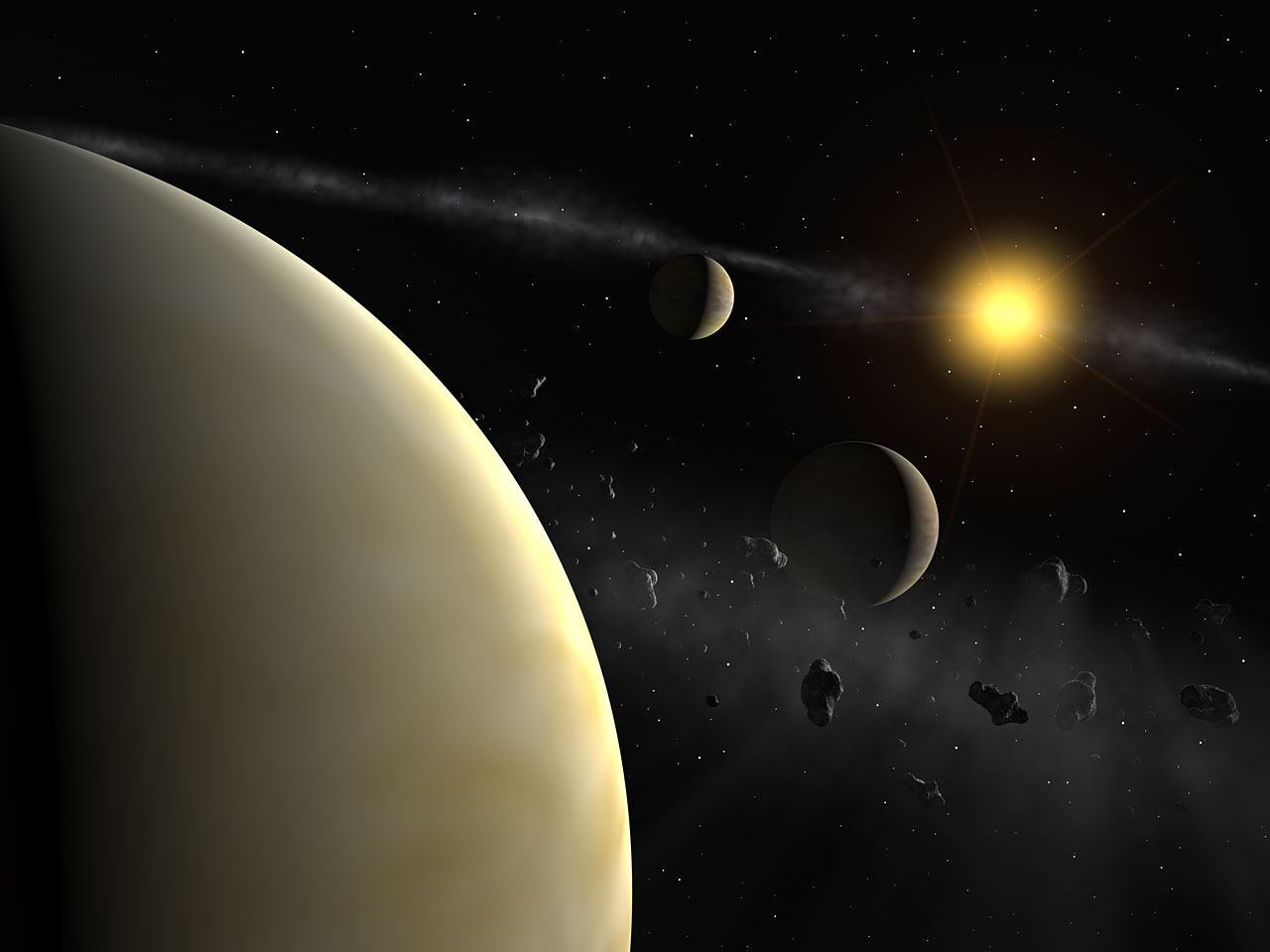
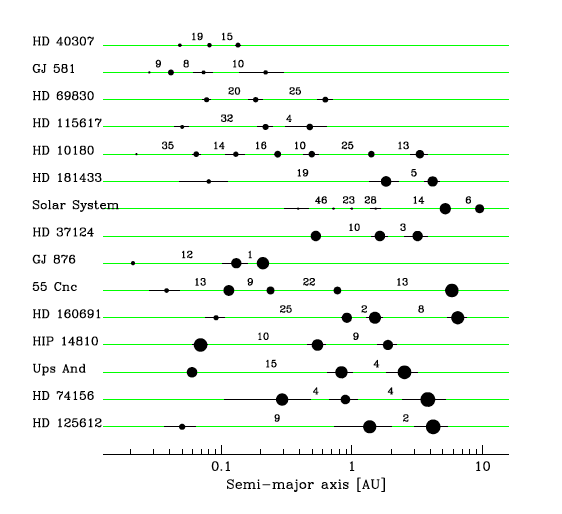
Understand planetary system architecture (formation, evolution, stability) and possibly planet physical properties from the semi-analytical dynamical modelling of planetary systems, including systems with circum-binary planets.
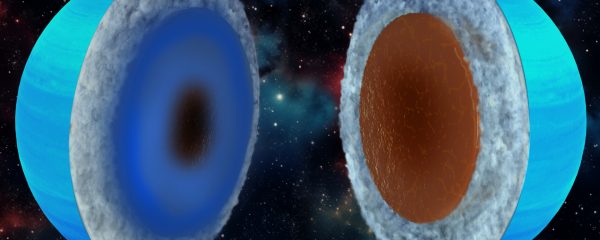
Constraining the structure of small-mass planets
Prof. S. Udry, (+ Succesor of D. Queloz, TBD)
The goal is to constrain the internal structure of small-mass planets, down to super-Earths (and Earths), through the precise determination of the basic physical parameters (mass and radius) of planets transiting bright stars. Practically, it is our involvement in 3 important transit projects and the associated radial-velocity complementary observations: CHEOPS, NGTS and PLATO.
Probing the outer regions of planetary systems
Dr D. Ségransan
Probe the outer regions of planetary systems, fundamental for the system dynamical evolution, through astrometric and imaging observations.
Additional information
Organigramme and Team of the project
Presentation slideshow of the project
News