
A New National Conference Brings Engineers and Scientists Together

The first national conference “Swiss Innovation for Astrophysics and Planetary Science” will take place in Bern from 20–22 January 2026, hosted by the Technology and Innovation Platform of NCCR PlanetS. The event will spotlight the development of technology and software for ground- and space-based telescopes, scientific instruments, and planetary exploration. Its unique focus is on “solutions” to scientific “needs” – bridging the gap between scientific ambition and technological realization.
The “Swiss Innovation for Astrophysics and Planetary Science” conference that will take place in January 2026 invites participation from industry, particularly small and medium enterprises, Universities of Applied Sciences, and engineering groups at research institutions. Attendees are encouraged to contribute with short talks, posters, or hardware showcases. Areas of interest include opto-mechanical systems, high-precision mechanisms, robotics, embedded software, electronics, photonics, and data-driven technologies such as AI and automation in instrumentation.
 Elena Benedetto, Leader of the NCCR PlanetS Technology & Innovation Platform and Conference Chair, is convinced that Astronomy is now recognized as Big Science: discoveries depend on large-scale instruments, intensive data processing, major resources, and collaboration in both research and R&D. “Yet, while researchers have numerous conferences to share scientific results, in Switzerland – and probably also in Europe – there is no structured platform for technology discussion,” Benedetto says. She adds that the dialogue between academia and industry is often difficult, with engineers and researchers rarely meeting on common ground. “Establishing a forum for technology and innovation can change this and connect scientists, engineers, and industry around the development of instrumentation and technology infrastructure, a strategic pillar of astrophysics and planetary science.”
The conference aims to strengthen collaboration among Swiss actors by connecting engineering expertise with the scientific goals of future missions – from upcoming telescope programs to in-situ planetary experiments. By fostering dialogue between research groups and industrial partners, the event seeks to catalyze new collaborations and boost Switzerland’s contribution to major international space projects.
 Nicolas Thomas, Director of NCCR PlanetS and principal investigator on numerous solar system missions, emphasises the mutual benefits of such events for academia and industry. He explains that they serve “two main purposes.” “Firstly, it is important for scientists to understand well, the capabilities of the Swiss industrial community,” Thomas says. “In general, Switzerland cannot build a full top-level instrument without input from international partners. But SIAPS can help identify Swiss technologies that are applicable. Conversely, the Swiss industrial community can see the directions that the Swiss academic institutes want to take and can then, if they have the appropriate capability, position themselves for participation.”
With no registration fee and a diverse program built around practical problem-solving, Swiss Innovation for Astrophysics and Planetary Science embodies the spirit of cooperation that drives technological breakthroughs in space science.
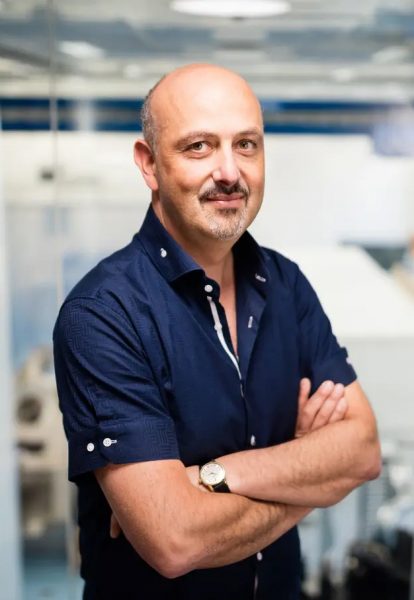 Francesco Pepe, Director of the Department of Astronomy at the University of Geneva and a leader in the construction of several major spectrographs for large ESO telescopes, is a member of the Scientific Organizing Committee of the conference. “SIAPS is not only meant to inform companies about future market opportunities in astronomy and planetary science,” explains Pepe. “It’s an occasion – I hope the first of a series – for all key players to interact about needs and challenges, on the one hand, and ideas and possible solutions, on the other hand, such that they can optimise their future R&D strategies while better knowing the context.”
Swiss Innovation for Astrophysics and Planetary Science
20–22 January 2026
Venue: Universal Postal Union, Bern
THEMATIC AREA – TENTATIVE DAY 1:
Big data handling & automation, Data processing, ML/AI & data reduction, Embedded software, High Performance Computing (HPC)
THEMATIC AREA – TENTATIVE DAY 2:
Opto-mechanical systems, High precision mechanisms, Vacuum / Cryogenics, High reliability electronics, Robotics and automation
THEMATIC AREA – TENTATIVE DAY 3:
Photonics and Lasers, Sensing and Detectors
Pre-registration: https://indico.global/e/swiss-tech-astro
Categories: News, Uncategorized